
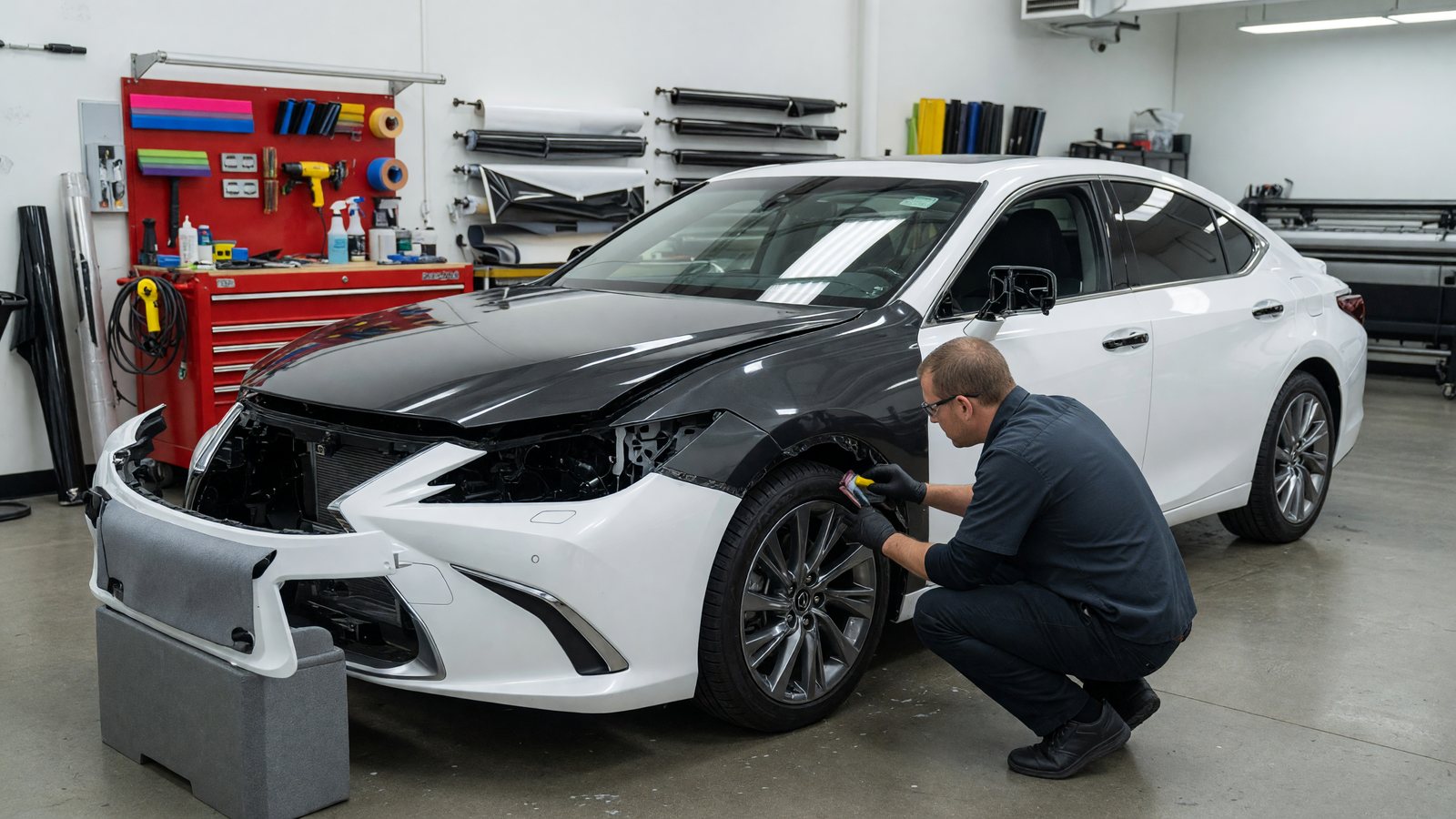
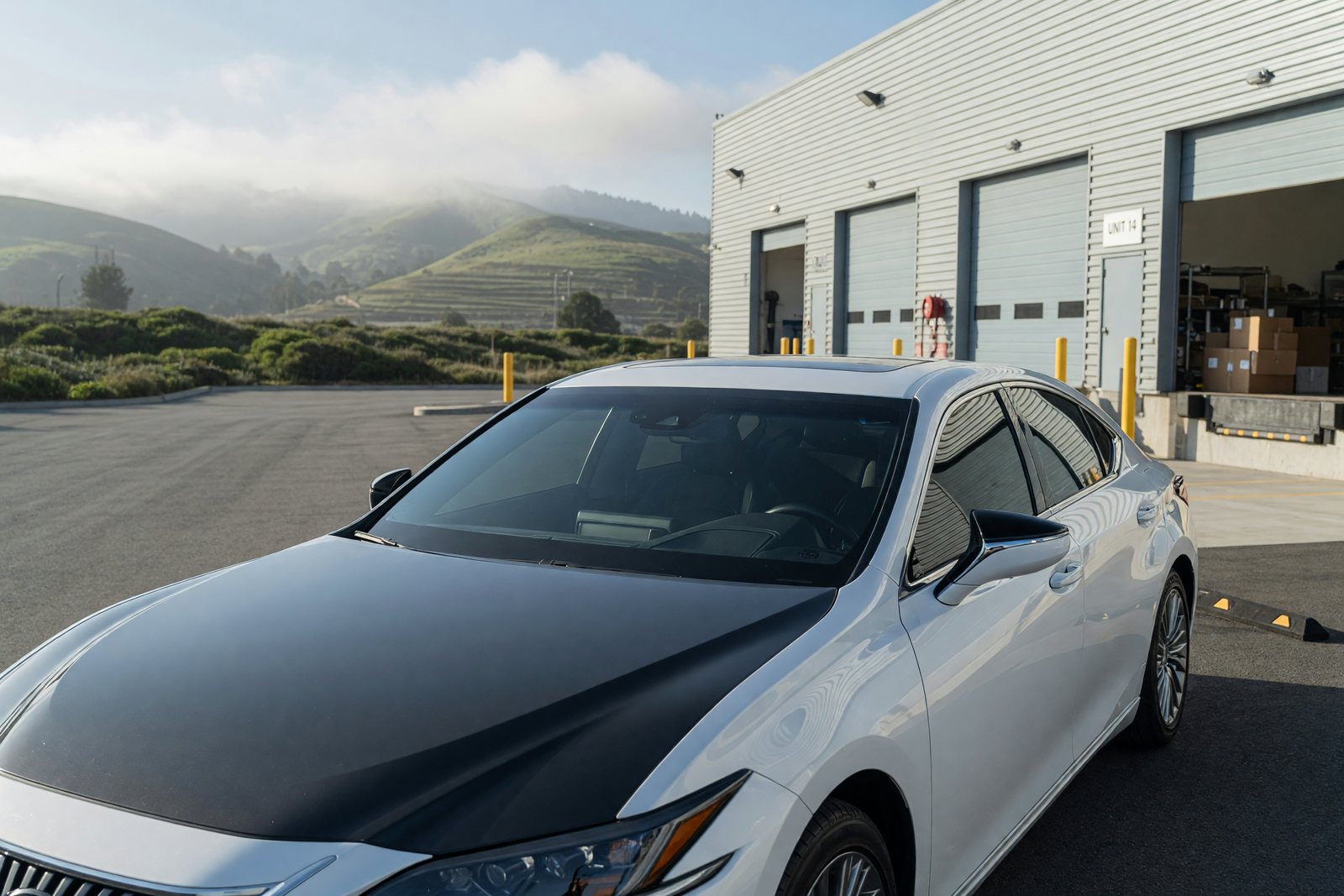
A color change PPF install on a brand-new Lexus ES 350 starts with a socket set, not a squeegee. At Graphix Lab in South San Francisco, the team took off the full front bumper, the side mirrors and the trim between the doors before any film touched the paint, so the new color could be tucked in as far as possible. The same car also got a light 35% window tint, picked to keep the interior visible.
The details below come from the installer’s walkthrough in Graphix Lab’s shop video, checked against the shop’s own service pages and California’s window film law. Use them as a checklist for your own color change PPF. The images here are AI-generated illustrations, not photographs of this Lexus installation.
Key Takeaways
- The Lexus ES 350 color change started with removing the full front bumper, the side mirrors and all the trim between the doors.
- Taking panels off lets the installer tuck the film into edges and gaps instead of stopping short of them.
- A 35% window tint kept the Lexus interior visible while still rejecting a good amount of heat, which is what the owner wanted.
- California allows only clear, colorless film on front side windows, so a 35% shade is a rear glass choice.
- Graphix Lab’s installer says to view color samples in person, in sunlight, because many colors look different outdoors.
What Is Color Change PPF?
Color change PPF is paint protection film that carries its color in the film itself, so one install changes how the car looks and shields the paint underneath. It is a different product from a vinyl wrap, which is thinner and built mainly for appearance. Graphix Lab sets the two side by side in its post on color PPF versus vinyl wrap on a Cybertruck, and shows the matte end of the range in a Tesla Model X color PPF install.
The protective side is a big part of the appeal on Bay Area roads. The Model X post points to gravel on 101 and changeable weather as the daily wear on paint, and it describes color PPF as roughly 8 mils thick and self-healing, so light swirl marks fade with heat. Those figures are the shop’s own, and the film brand and finish will change them, so treat them as a starting point for your quote conversation.
The Lexus was a full color change, not a partial accent. In the video, the white ES 350 already has dark film on the fender and door by the time the installer finishes explaining the plan.
Why Does a Color Change on a Lexus ES 350 Start With Taking the Car Apart?
Removing panels lets the installer wrap film into edges and gaps instead of ending it at them. The Graphix Lab installer lists what came off this car, and his reason is short: that way the film can be tucked in as much as possible.
- The full front bumper
- The side mirrors
- All the trim in between the doors
This matters most when the new color sits far from the factory color. A white car finished in a dark film shows any exposed edge as a pale line, and lifted edges are one of the problems the shop watches for after installation. Its 10 to 15 day checkup looks for lifting and bubbling as the film settles, and the team works with you on a fix if it finds any.
How Does a 35% Window Tint Fit Alongside a Color Change?
A 35% window tint lets 35% of visible light pass through the glass. On the Lexus, the installer chose it on purpose: the car has a beautiful interior, and the owner did not want to block it. He describes a very light shade that still gives a good amount of heat rejection while letting the interior show a little.
Heat rejection is the everyday payoff in South San Francisco, where morning fog can give way to hard sun on I-280. Graphix Lab’s guide to how window tinting handles Bay Area heat covers cabin temperature, UV and interior fading in more detail.
Tint and color film can go on the same vehicle in one visit, according to Graphix Lab’s Cybertruck write-up. If you are comparing shops for the glass work, the shop’s guide on why the window tint shop matters as much as the film covers what clean installation looks like.
What Does California Law Allow for a 35% Tint?
California is stricter than most states. Under Vehicle Code Section 26708, the only film allowed on the front side windows is clear, colorless film with at least 88% visible light transmittance, and the glass with the film applied must still meet the federal 70% minimum. Side windows behind the driver are exempt from the film restriction, and so is the rear window when the car has outside mirrors on both sides.
| Window | What California allows | Where a 35% film fits |
|---|---|---|
| Front side windows | Clear, colorless film of at least 88% VLT only, with an installer certificate in the car | Not allowed |
| Rear side windows | Exempt from the film restriction | Allowed |
| Rear window | Exempt when outside mirrors sit on both sides of the car | Allowed |
In practice, a 35% film in California belongs on the rear glass. This is a plain-language summary rather than legal advice, so ask the shop which windows get which film before anything is cut.
Why Should You See Color PPF Samples in Person?
Because color changes with light. The installer says he always encourages clients to come in and see the color in person, since many colors look different once a swatch is carried outside into the sun. The sun brings out a lot more in the color itself, and a screen or a photo cannot show that.
He also says the shop has over 350 color options to choose from. Take your shortlist outside, look at each swatch in shade and in direct sun, and compare finishes side by side before you commit to a full car.
Clients can reach the shop by phone, email or Yelp, or simply walk in. Graphix Lab is at 173 S Spruce Ave in South San Francisco, open Monday to Friday from 9:00 am to 5:30 pm and Saturday from 9:00 am to 2:00 pm.
What Should You Ask Before Booking a Color Change PPF Install?
Five questions make any quote easier to compare:
- Which panels will come off the car, and which edges will be tucked?
- Can I see the film color outside, in sunlight, before I choose?
- Which windows get tint, at what percentage, and does that match California law?
- How long will the car stay in the shop? Color PPF takes longer to install than vinyl, according to Graphix Lab’s Cybertruck write-up.
- What follow-up and warranty come with the film I picked? The shop explains how PPF warranties work, so confirm what applies to your specific film.
Related Resources
- More installs and guides from the Graphix Lab blog
- How paint protection film is applied
- Full color change with a vinyl wrap
- Graphix Lab’s wrap and film portfolio
- Graphix Lab services
- The federal glazing standard, FMVSS 205
Frequently Asked Questions
Is color change PPF better than a vinyl wrap?
It depends on how long you plan to keep the car and how much impact protection you want. Color PPF is paint protection film, so it is built to protect the paint as well as change its color, while vinyl is a thinner color film. Graphix Lab’s Cybertruck comparison lists the trade-offs, including the longer install time for color PPF.
How long does color PPF last?
Graphix Lab’s Tesla Model X post puts the rated life of color PPF at 7 to 10 years, against 3 to 5 years for typical vinyl. Real life depends on the film, the installation and how the car is cared for, so ask the shop what its warranty covers.
Is 35% window tint legal in California?
Not on the front side windows, where California allows only clear, colorless film of at least 88% VLT. A 35% film is legal on the side windows behind the driver and on the rear window when the car has outside mirrors on both sides.
How dark is 35% window tint?
A 35% tint lets 35% of visible light through, which puts it in the middle of the common range. Graphix Lab’s installer described the Lexus film as a very light shade that still shows the interior a little.
Can you do a color change PPF on a brand-new car?
Yes. The Lexus ES 350 in Graphix Lab’s video was brand new when the full color change was done. Ask the shop which panels it removes and how it preps the car before the film goes on.
See Your Color Change PPF in Sunlight First
The Lexus job shows the order worth copying: choose the color outside in daylight, settle which panels come off and which windows get film, then confirm the follow-up visit. A new car deserves that planning because the finish will be on it for years. To start, call Graphix Lab at (415) 999-7080, walk in at 173 S Spruce Ave in South San Francisco, or send a message through the contact page.