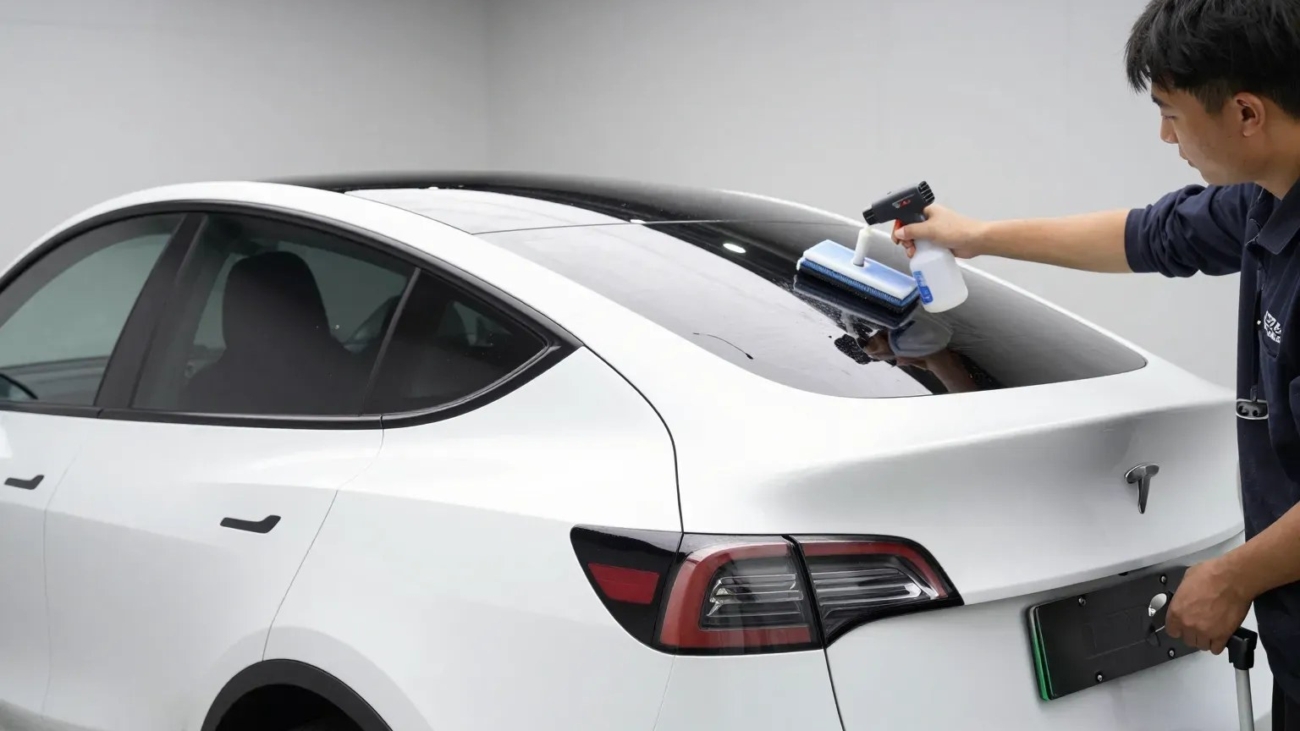
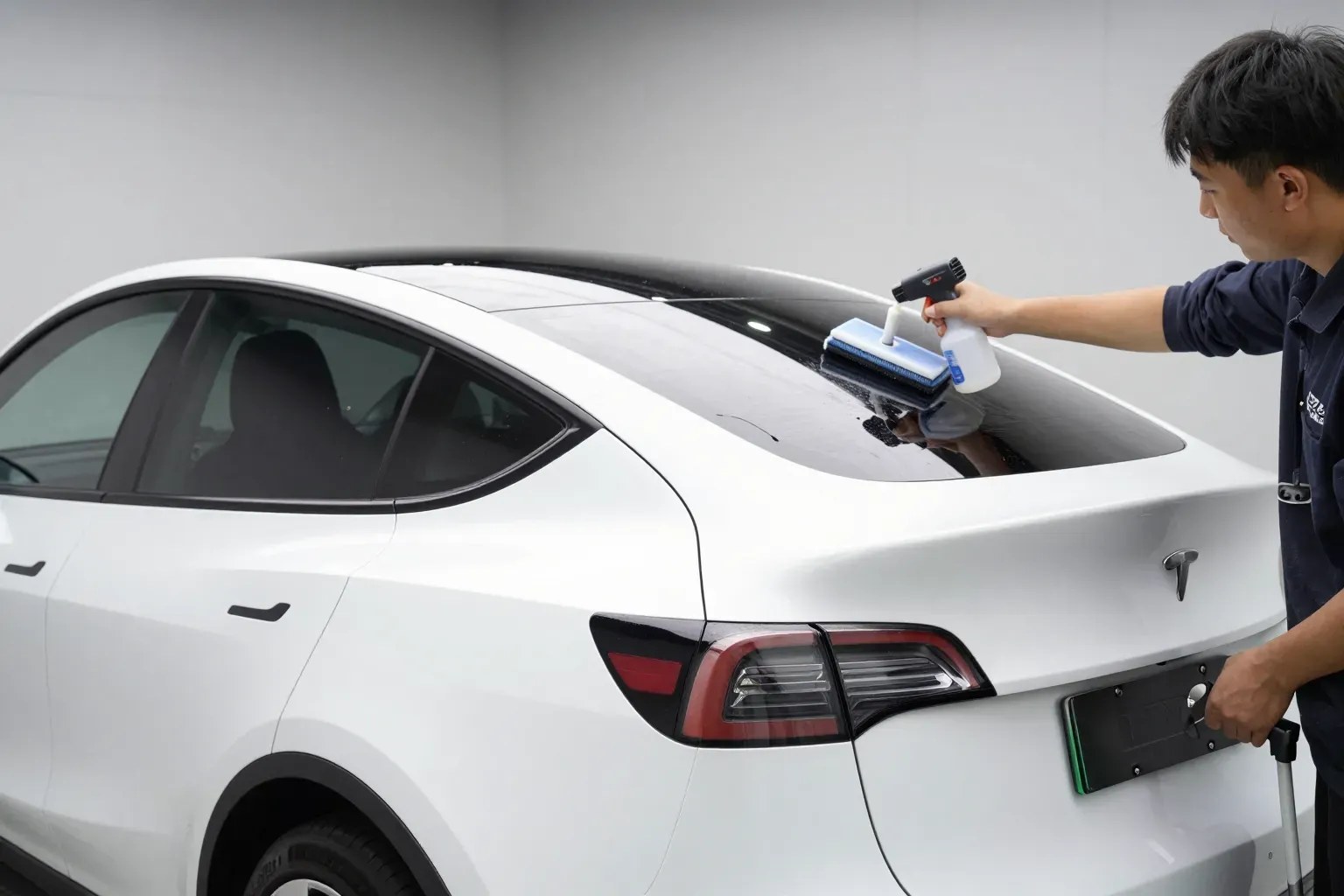
Illustration of an installer squeegeeing ceramic window film onto the rear window of a white Tesla Model Y in a tint shop bay

Tesla Model Y Window Tint: How We Install XPEL Ceramic Film, Step by Step

Illustration of an installer squeegeeing ceramic window film onto the rear window of a white Tesla Model Y in a tint shop bay
AI-generated illustration of a Tesla Model Y window tint install, not a photo of the video job.

Tesla Model Y window tint looks like a simple job from the outside, because film goes on glass. Inside our South San Francisco shop it is a chain of small decisions, and each one decides whether the tint still looks flat and clean years from now. We filmed a full XPEL ceramic tint install on a Model Y, from the first cut to the final squeegee pass. This guide walks through what the video shows and why every step is there, and it doubles as a checklist for judging any installer.

Key Takeaways

  • A careful Model Y tint install starts with film cut by computer, slightly larger than each window, then finished by hand.
  • Dust and lint trapped under film cause rough finishes, so the glass is cleaned several times before the film goes on.
  • Heating the film and molding it to the curve of the glass helps it sit flat instead of channeling or lifting later.
  • XPEL ceramic tint blocks over 99 percent of harmful UV rays, which protects seats and trim as well as the people inside.
  • California limits tint on front side windows, so the shade for each window should be confirmed before you book.

Step 1: The Film Is Computer Cut, Then Finished by Hand

The install in the video starts at the cutting station, not at the car. The team runs a computer cut on the XPEL film, working from a pattern for the Model Y’s windows. The cut comes out a little bigger than the actual window on purpose. That extra margin lets the installer file the edges by hand, so the film runs all the way to the end of the glass and finishes nice and smooth.

A computer cut also means the film arrives at the car already shaped to the window. The edge matters more than most buyers expect. A clean, even edge is the first thing you notice on a good job and the first thing that lifts on a weak one. We describe the same signs in our guide on why the tint shop matters as much as the film: even shade across every pane and sharp cut lines at the seals.

Step 2: The Glass Is Cleaned Until No Dust or Lint Is Left

Before any film touches the window, the installer sprays and wipes the glass, then does it again. In the video he repeats the cleaning a few times to make sure no dust or lint is left on the surface. Window glass traps lint easily, and anything left behind ends up sealed between the glass and the film, where it shows as specks you can see in direct sunlight.

This is the least glamorous step, and it is a big reason a Tesla Model Y ceramic tint job looks flawless on pickup day. A shop that rushes the prep cannot fix it afterward without pulling the film and starting over.

Step 3: The Film Is Heat Molded to the Curve of the Window

Once the glass is clean, the team does something many DIY installs skip. They preheat the film with a heat gun and mold it to the window. Car glass is not flat, and the Model Y’s side windows carry a slight curve. Film that has not been shaped to that curve tends to fight the glass.

As the team explains on camera, shaping the film first is what keeps channeling out of the tint in the future. In plain terms, the film learns the shape of the window before it is applied, so it settles flat instead of lifting at the edges as the car goes through heat cycles.

Step 4: One Last Squeegee Pass, Then the Tint Goes On

With the film shaped, the installer squeegees the water off the glass one more time and only then applies the tint. That final pass clears loose water from the window before the film is positioned, so there is less moisture to chase out afterward.

Why XPEL Ceramic Tint Protects the Car, Not Only the People Inside

One line from the video is worth repeating. Tint is not just for you, it is for the car too. Many new cars come with light or brightly colored seats, and if UV rays hit them for long enough, the color can fade and change. Tint that blocks UV slows that process, which helps the interior look newer for longer and helps protect resale value.

XPEL states that its PRIME window tint blocks over 99 percent of harmful UV rays, and the brand’s automotive window tint range also targets heat rejection and glare. Ceramic film is non-metallic, so it does not interfere with phone, GPS or Bluetooth signals, which matters in a car as connected as a Tesla. Bay Area weather makes this practical: morning fog can give way to hard sun on I-280 by noon, a pattern we cover in our post on beating the Bay Area heat with professional tint. If you are weighing ceramic against cheaper film, our ceramic tint comfort and clarity breakdown shows what the upgrade buys you.

California Tint Law and Your Model Y

Shade is the one decision the video does not cover, and in California it is regulated. Under Vehicle Code Section 26708, aftermarket material on the front side windows is limited to clear, colorless film with a minimum visible light transmittance of 88 percent. The glass with film applied must still meet the federal 70 percent light transmittance standard, and the driver must carry a certificate signed by the installing company. Rules for rear side glass and the back window are looser, but they are still worth confirming.

The practical advice is simple. Ask your installer which film and shade is legal for each window of your Model Y, get any required certificate in writing, and treat that conversation as part of the quote.

The Four Steps at a Glance

StepWhat the team doesWhat it helps prevent
1. Computer cutFilm is cut slightly larger than the window and the edges are filed by handGaps, ragged edges and blade marks near the glass
2. Glass prepThe window is sprayed and wiped several timesDust and lint trapped under the film
3. Heat moldingFilm is preheated and shaped to the curve of the glassChanneling and lifting later on
4. Final squeegee and applyWater is squeegeed once more, then the film is appliedMoisture left under the film and an uneven finish

What to Ask Any Installer Before You Book Model Y Tint

You do not need to be a tint expert to compare shops. These questions come straight from the steps above, and a good installer will answer them without hesitation:

  • Is the film cut by computer, or cut on the glass?
  • How many times is each window cleaned before the film goes on?
  • Is the film heat molded to curved glass before it is applied?
  • Which XPEL film and shade will go on each window, and is that shade legal in California?
  • What happens if lifting or bubbling shows up after the install?

After the Install: The 10 to 15 Day Check-Up

Tint is not finished when you drive away. Film settles over the first days, so we bring every client back for a 10 to 15 day check-up. We inspect for lifting, bubbling or other issues, review how the film is performing, and fix anything that needs attention.

You can see the full range of work we do on our services page, including paint protection film and wraps. Graphix Lab is at 173 S Spruce Ave, South San Francisco, CA 94080, open Monday to Friday 9:00 am to 5:30 pm and Saturday 9:00 am to 2:00 pm. You can contact the shop or call 1 (415) 999-7080 to ask about tint for your car.

Related Resources

Common Questions About Tesla Model Y Window Tint

1. Is ceramic tint worth it on a Tesla Model Y?

For most owners, yes. Ceramic film is built to cut heat and block UV without metal layers, so it does not interfere with signals. It also protects seats and trim from fading, which the video highlights as a benefit for the car itself.

2. Why is the film cut bigger than the window?

The oversize cut gives the installer room to file the edges by hand. That is how the film reaches the very end of the glass and finishes smooth, instead of leaving a gap or a rough line.

3. Can I tint every window on my Model Y in California?

Not to any shade you like. Front side windows are tightly limited under California law, while rear side glass and the back window are treated differently. Ask the installer to confirm the legal shade for each window and put it in the quote.

4. Will tint stop my interior from fading?

It slows it down. XPEL says its PRIME film blocks over 99 percent of harmful UV rays, and UV is what fades and changes the color of seats over time. Tint reduces that exposure but does not replace normal interior care.

5. What happens at the 10 to 15 day check-up?

We inspect the film for lifting, bubbling or other issues as it settles, talk through how it is performing, and make adjustments where needed. The details are in our post on the check-up process.

Great Model Y Tint Is Made in the Prep

The steps in the video are quiet ones: a computer cut, repeated cleaning, heat molding and one more squeegee pass. Together they decide whether Tesla Model Y window tint stays flat, clear and tight to the glass for years. If you want that level of care on your own car, book a tint appointment with Graphix Lab and ask which XPEL film and shade fits each window.
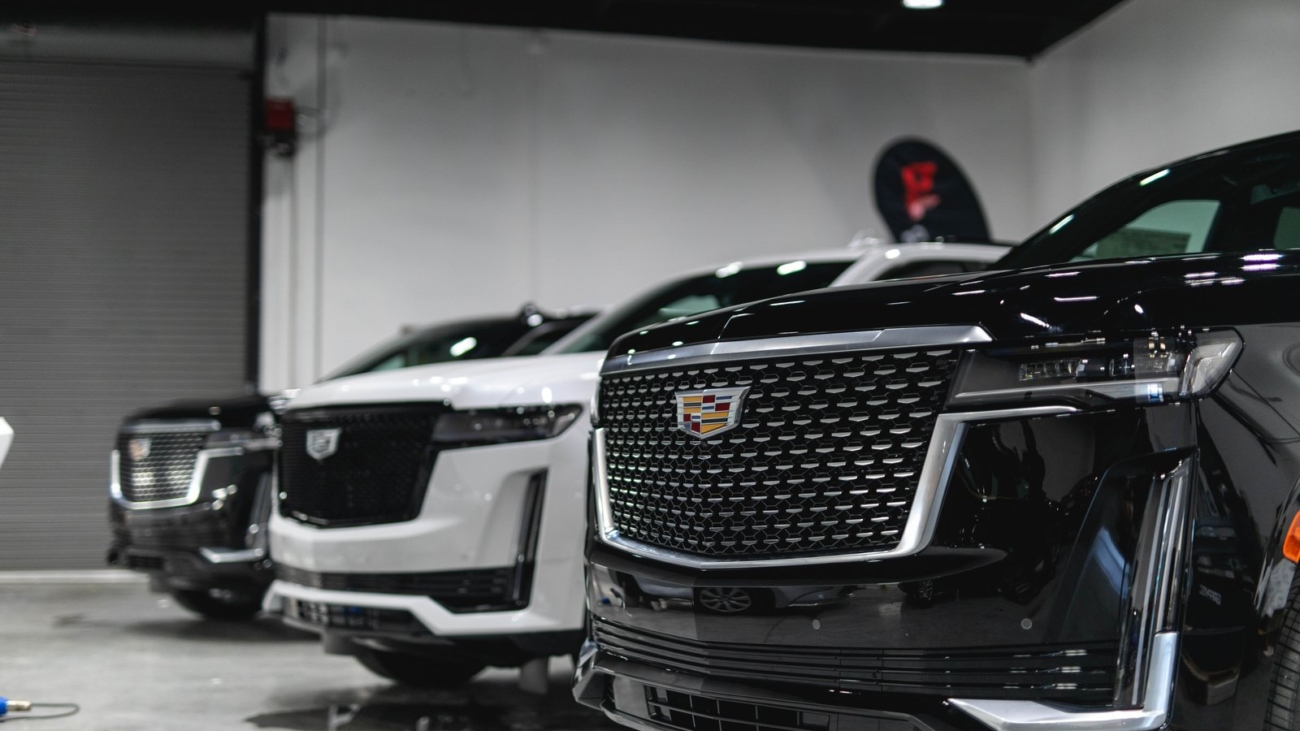
Cadillac SUVs with glossy paint protection in the Graphix Lab South San Francisco shop

What Cheap PPF Actually Looks Like (And What It Costs You)

Close-up of a matte black hood and headlight after professional paint protection film

A customer walks in wanting paint protection film at a price below what quality work actually costs. They shop around, find someone who says yes, and drive away thinking they scored a deal. A week later, the hood of their white Tesla is covered in bubbles, wrinkles, and peeling black material that looks nothing like protection. That is not a horror story from the internet. It is a scenario the team at Graphix Lab in South San Francisco knows all too well. Cheap PPF installation does not simply fail to protect your car. It can actively damage the paint beneath it, leaving you with a bigger bill than a proper installation would have cost in the first place.

Key Takeaways

  • Quality PPF installation requires certified technicians, professional-grade film, and precise application, not just any clear material pressed onto a hood.
  • Poorly installed PPF bubbles, wrinkles, and peels within days, and the adhesive it leaves behind can damage your clear coat when removed.
  • Removing a failed cheap PPF job often costs as much as, or more than, a proper installation would have.
  • South San Francisco drivers face coastal salt air, Bay Area highway debris, and UV exposure that demand a film that actually bonds and holds long term.
  • Graphix Lab uses certified film brands, plotter-cut templates, and warrantied installs on every vehicle that comes through the door.

The Setup: When “Cheaper” Becomes a Real Problem

The Graphix Lab team recently captured this exact situation in a short video, and the reaction from viewers confirmed what every professional installer already knows: the “can you do it cheaper?” conversation is a weekly occurrence in any serious shop. In the video, a customer requests PPF at a lower price. The crew plays along by applying what is clearly a crinkled plastic sheet to the car’s hood, squeegeeing it on with the same tools used for real film. The joke lands because anyone who has seen genuine PPF installed correctly can spot the difference immediately.

Real paint protection film is a multi-layer, optically clear urethane product. It is cut precisely with a digital plotter, laid flat by a trained hand, and should show no bubbles, no visible seams, and no wrinkles once cured. What budget “PPF” often turns out to be is something altogether different: a thin, unstable material that cannot conform to contoured bodywork, particularly on modern vehicles with complex curves like the Tesla Model Y, Model 3, or any current-generation luxury car.

Why Cheap PPF Fails on Your Car’s Paint

Paint protection film is not complicated to understand, but it is genuinely difficult to install correctly. The film itself is one factor. The person applying it, the tools they use, and the conditions of the shop are just as important to the final result.

Professional-grade PPF from certified brands requires a climate-controlled workspace, a plotter-cut template specific to your vehicle’s make and model, thorough surface decontamination before application, and a technician trained in proper slip solution management and squeegee technique. Budget installers frequently skip one or more of these steps. Some use off-brand film that lacks the self-healing topcoat that allows genuine PPF to recover from minor scratches when exposed to heat. Others apply film in dusty conditions or over panels that were not properly cleaned, trapping debris under the surface from the first day.

The result is not just cosmetic. When film does not bond fully, moisture works its way under the edges. A vehicle parked outdoors in South San Francisco, where coastal air carries salt and humidity year-round, accelerates that edge-lifting significantly. By the time bubbling becomes visible from a few feet away, the film may already be pulling adhesive off the clear coat every time the edge catches.

The Real Cost of a Bad PPF Job

A customer who pays a budget installer a low price to wrap their hood and sees the film fail within two weeks is not walking away with savings. They are walking into a sequence of additional costs that typically adds up like this:

Step What It Involves Typical Cost
Remove the failed film Heat application, adhesive remover, careful panel work to avoid scratching $100 to $200 in labor
Assess paint damage Inspect clear coat for adhesive transfer, marring, or lifting after removal Included with removal
Paint correction if needed Polish out adhesive haze or micro-scratches left by the failed film $150 to $400 per panel
Proper PPF installation Professional-grade film, plotter-cut template, warrantied install on a now-corrected panel What you should have paid from the start

A driver who spent a few hundred dollars trying to save money can easily end up paying double or triple that to restore the car to a state where proper film can go on cleanly. The “deal” costs more than the professional quote they passed on.

What a Professional PPF Installation Actually Includes

At Graphix Lab, every paint protection film installation begins with a full surface decontamination and panel inspection. The film is cut from a digital template for your specific vehicle model, not hand-trimmed freehand along the car’s edge. All work happens inside a clean, climate-controlled bay, not a parking lot or an unheated garage where dust and debris are in the air.

The shop holds certification with the United Application Standards Group and works with XPEL and other industry-grade film brands that carry manufacturer warranties. That warranty matters in practice: if the film develops yellowing, bubbling, or delamination as a result of the material itself rather than user damage, the manufacturer backs it. Budget brands carry no such protection, which means the customer carries all the risk.

Graphix Lab technicians are trained in the specific tolerances of each panel type. On complex surfaces like hood scoops, door cups, mirror housings, and A-pillar wraps, that training is the practical difference between a flat, invisible result you forget is there and the wrinkled disaster that inspired the video in the first place.

Why Bay Area Conditions Make Quality PPF a Real Investment

Drivers in South San Francisco and the surrounding peninsula deal with conditions that put paint under stress year-round. Highway 101 carries heavy commercial traffic that kicks up gravel and road debris at highway speed. Proximity to the Bay means persistent salt air that works into any paint chip or scratch that opens up. Morning fog creates repeated cycles of moisture and drying that test the edge adhesion of any applied film.

These are not conditions where marginal protection holds up. A film that bonds adequately in a dry inland climate may begin lifting at the edges within weeks of Bay Area coastal exposure. This is why Graphix Lab specifies film products rated for high-humidity and UV-intensive environments, and why proper application technique matters just as much as the product selected.

If your car lives in South San Francisco, Daly City, San Bruno, or anywhere along the peninsula corridor, the investment in proper protection pays back in preserved paint and repair costs that never happen. The gallery shows what correct installation looks like across a wide range of vehicles and coverage configurations.

Related Resources

Common Questions About Cheap PPF and What It Does to Your Car

1. How much does quality PPF installation cost in South San Francisco?

Pricing varies by vehicle and coverage area. A partial front-end kit covering the hood, front fenders, bumper, and mirrors typically runs between $1,200 and $2,500 at certified Bay Area shops, depending on the film brand and vehicle size. A full-body installation on a Tesla Model Y or comparable vehicle runs higher. The range reflects genuine material costs and the labor hours required for correct application, not inflated margins.

2. What happens if PPF is installed incorrectly?

Incorrectly installed PPF bubbles, wrinkles, or lifts at the edges within days to weeks. Beyond looking bad, failed film traps moisture against the paint and can transfer adhesive residue to the clear coat when removed. In worse cases, removal requires paint correction before a proper installation can go on, adding significant cost to what started as a bargain job.

3. Can bad PPF be removed without damaging my paint?

It depends on how long the film has been on and how it was applied. Recently failed PPF from a budget install can often be removed with heat and adhesive remover without lasting damage to the clear coat. Film that has been on for several months, especially over paint that was not properly prepared at install, carries a higher risk of clear coat damage during removal. A professional shop will assess the adhesion carefully before attempting removal.

4. What PPF brands does Graphix Lab use?

Graphix Lab works with XPEL and other certified industry brands that carry manufacturer warranties against yellowing, delamination, and bubbling caused by film failure. All installations use digital plotter-cut templates specific to the vehicle model rather than hand-trimmed material applied freehand on the car.

5. Is PPF worth it compared to just waxing or using ceramic coating?

Wax offers minimal physical protection against rock chips and debris impact. Ceramic coating provides excellent chemical resistance and hydrophobic surface properties but is not designed to absorb physical impacts. PPF is the only option that physically absorbs the force of road debris, with a self-healing topcoat that closes minor surface scratches on exposure to heat. For Bay Area drivers who spend time on highways with heavy truck traffic, pairing quality PPF with a ceramic coating gives the most complete protection available.

Protect Your Paint Once, and Do It Right

The video that started this conversation is funny because it reflects a real pattern: the gap between a cheap PPF job and a professional one is not just a price difference, it is a visible, structural difference you can see from across the shop floor. Graphix Lab has built its reputation in South San Francisco by doing the job correctly the first time, using certified materials, and standing behind the work with a warranty. If your car is worth protecting, it is worth protecting with film that will still be flat, clear, and bonded six months from now.

Book your PPF consultation with Graphix Lab and see what a professional installation looks like in person.

Graphix Lab’s cheap PPF vs professional install walkthrough. Watch on YouTube.
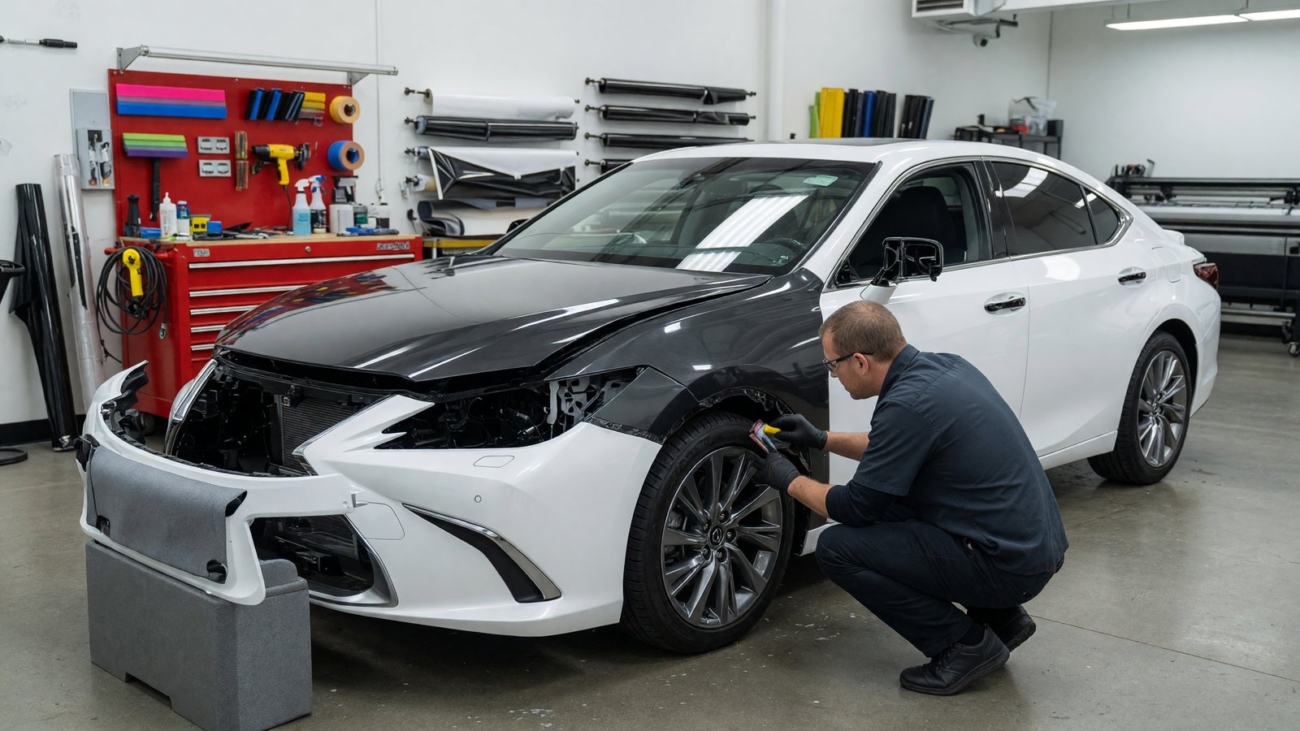
Illustration of an installer applying color change PPF to a white Lexus ES 350 with the front bumper removed

Color Change PPF on a Brand-New Lexus ES 350: What Happens Before the Film Goes On

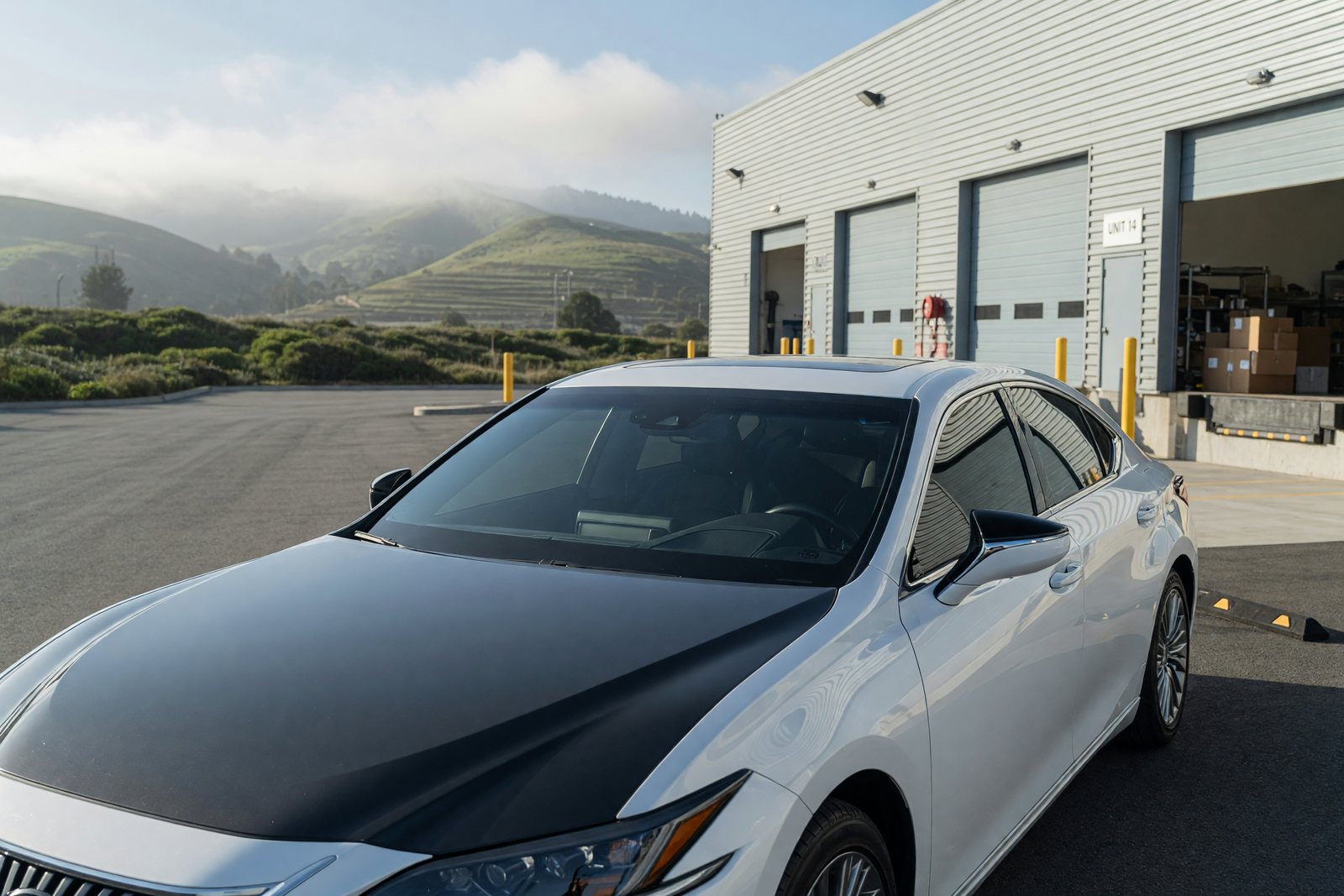
Illustration of a white Lexus ES 350 with charcoal color change PPF on the hood and front fenders in morning sunlight

A color change PPF install on a brand-new Lexus ES 350 starts with a socket set, not a squeegee. At Graphix Lab in South San Francisco, the team took off the full front bumper, the side mirrors and the trim between the doors before any film touched the paint, so the new color could be tucked in as far as possible. The same car also got a light 35% window tint, picked to keep the interior visible.

The details below come from the installer’s walkthrough in Graphix Lab’s shop video, checked against the shop’s own service pages and California’s window film law. Use them as a checklist for your own color change PPF. The images here are AI-generated illustrations, not photographs of this Lexus installation.

Key Takeaways

  • The Lexus ES 350 color change started with removing the full front bumper, the side mirrors and all the trim between the doors.
  • Taking panels off lets the installer tuck the film into edges and gaps instead of stopping short of them.
  • A 35% window tint kept the Lexus interior visible while still rejecting a good amount of heat, which is what the owner wanted.
  • California allows only clear, colorless film on front side windows, so a 35% shade is a rear glass choice.
  • Graphix Lab’s installer says to view color samples in person, in sunlight, because many colors look different outdoors.

What Is Color Change PPF?

Color change PPF is paint protection film that carries its color in the film itself, so one install changes how the car looks and shields the paint underneath. It is a different product from a vinyl wrap, which is thinner and built mainly for appearance. Graphix Lab sets the two side by side in its post on color PPF versus vinyl wrap on a Cybertruck, and shows the matte end of the range in a Tesla Model X color PPF install.

The protective side is a big part of the appeal on Bay Area roads. The Model X post points to gravel on 101 and changeable weather as the daily wear on paint, and it describes color PPF as roughly 8 mils thick and self-healing, so light swirl marks fade with heat. Those figures are the shop’s own, and the film brand and finish will change them, so treat them as a starting point for your quote conversation.

The Lexus was a full color change, not a partial accent. In the video, the white ES 350 already has dark film on the fender and door by the time the installer finishes explaining the plan.

Why Does a Color Change on a Lexus ES 350 Start With Taking the Car Apart?

Removing panels lets the installer wrap film into edges and gaps instead of ending it at them. The Graphix Lab installer lists what came off this car, and his reason is short: that way the film can be tucked in as much as possible.

  • The full front bumper
  • The side mirrors
  • All the trim in between the doors

This matters most when the new color sits far from the factory color. A white car finished in a dark film shows any exposed edge as a pale line, and lifted edges are one of the problems the shop watches for after installation. Its 10 to 15 day checkup looks for lifting and bubbling as the film settles, and the team works with you on a fix if it finds any.

How Does a 35% Window Tint Fit Alongside a Color Change?

A 35% window tint lets 35% of visible light pass through the glass. On the Lexus, the installer chose it on purpose: the car has a beautiful interior, and the owner did not want to block it. He describes a very light shade that still gives a good amount of heat rejection while letting the interior show a little.

Heat rejection is the everyday payoff in South San Francisco, where morning fog can give way to hard sun on I-280. Graphix Lab’s guide to how window tinting handles Bay Area heat covers cabin temperature, UV and interior fading in more detail.

Tint and color film can go on the same vehicle in one visit, according to Graphix Lab’s Cybertruck write-up. If you are comparing shops for the glass work, the shop’s guide on why the window tint shop matters as much as the film covers what clean installation looks like.

What Does California Law Allow for a 35% Tint?

California is stricter than most states. Under Vehicle Code Section 26708, the only film allowed on the front side windows is clear, colorless film with at least 88% visible light transmittance, and the glass with the film applied must still meet the federal 70% minimum. Side windows behind the driver are exempt from the film restriction, and so is the rear window when the car has outside mirrors on both sides.

WindowWhat California allowsWhere a 35% film fits
Front side windowsClear, colorless film of at least 88% VLT only, with an installer certificate in the carNot allowed
Rear side windowsExempt from the film restrictionAllowed
Rear windowExempt when outside mirrors sit on both sides of the carAllowed

In practice, a 35% film in California belongs on the rear glass. This is a plain-language summary rather than legal advice, so ask the shop which windows get which film before anything is cut.

Why Should You See Color PPF Samples in Person?

Because color changes with light. The installer says he always encourages clients to come in and see the color in person, since many colors look different once a swatch is carried outside into the sun. The sun brings out a lot more in the color itself, and a screen or a photo cannot show that.

He also says the shop has over 350 color options to choose from. Take your shortlist outside, look at each swatch in shade and in direct sun, and compare finishes side by side before you commit to a full car.

Clients can reach the shop by phone, email or Yelp, or simply walk in. Graphix Lab is at 173 S Spruce Ave in South San Francisco, open Monday to Friday from 9:00 am to 5:30 pm and Saturday from 9:00 am to 2:00 pm.

What Should You Ask Before Booking a Color Change PPF Install?

Five questions make any quote easier to compare:

  1. Which panels will come off the car, and which edges will be tucked?
  2. Can I see the film color outside, in sunlight, before I choose?
  3. Which windows get tint, at what percentage, and does that match California law?
  4. How long will the car stay in the shop? Color PPF takes longer to install than vinyl, according to Graphix Lab’s Cybertruck write-up.
  5. What follow-up and warranty come with the film I picked? The shop explains how PPF warranties work, so confirm what applies to your specific film.

Related Resources

Frequently Asked Questions

Is color change PPF better than a vinyl wrap?

It depends on how long you plan to keep the car and how much impact protection you want. Color PPF is paint protection film, so it is built to protect the paint as well as change its color, while vinyl is a thinner color film. Graphix Lab’s Cybertruck comparison lists the trade-offs, including the longer install time for color PPF.

How long does color PPF last?

Graphix Lab’s Tesla Model X post puts the rated life of color PPF at 7 to 10 years, against 3 to 5 years for typical vinyl. Real life depends on the film, the installation and how the car is cared for, so ask the shop what its warranty covers.

Is 35% window tint legal in California?

Not on the front side windows, where California allows only clear, colorless film of at least 88% VLT. A 35% film is legal on the side windows behind the driver and on the rear window when the car has outside mirrors on both sides.

How dark is 35% window tint?

A 35% tint lets 35% of visible light through, which puts it in the middle of the common range. Graphix Lab’s installer described the Lexus film as a very light shade that still shows the interior a little.

Can you do a color change PPF on a brand-new car?

Yes. The Lexus ES 350 in Graphix Lab’s video was brand new when the full color change was done. Ask the shop which panels it removes and how it preps the car before the film goes on.

See Your Color Change PPF in Sunlight First

The Lexus job shows the order worth copying: choose the color outside in daylight, settle which panels come off and which windows get film, then confirm the follow-up visit. A new car deserves that planning because the finish will be on it for years. To start, call Graphix Lab at (415) 999-7080, walk in at 173 S Spruce Ave in South San Francisco, or send a message through the contact page.

Graphix Lab’s Lexus color change PPF and window tint walkthrough. Watch on YouTube.
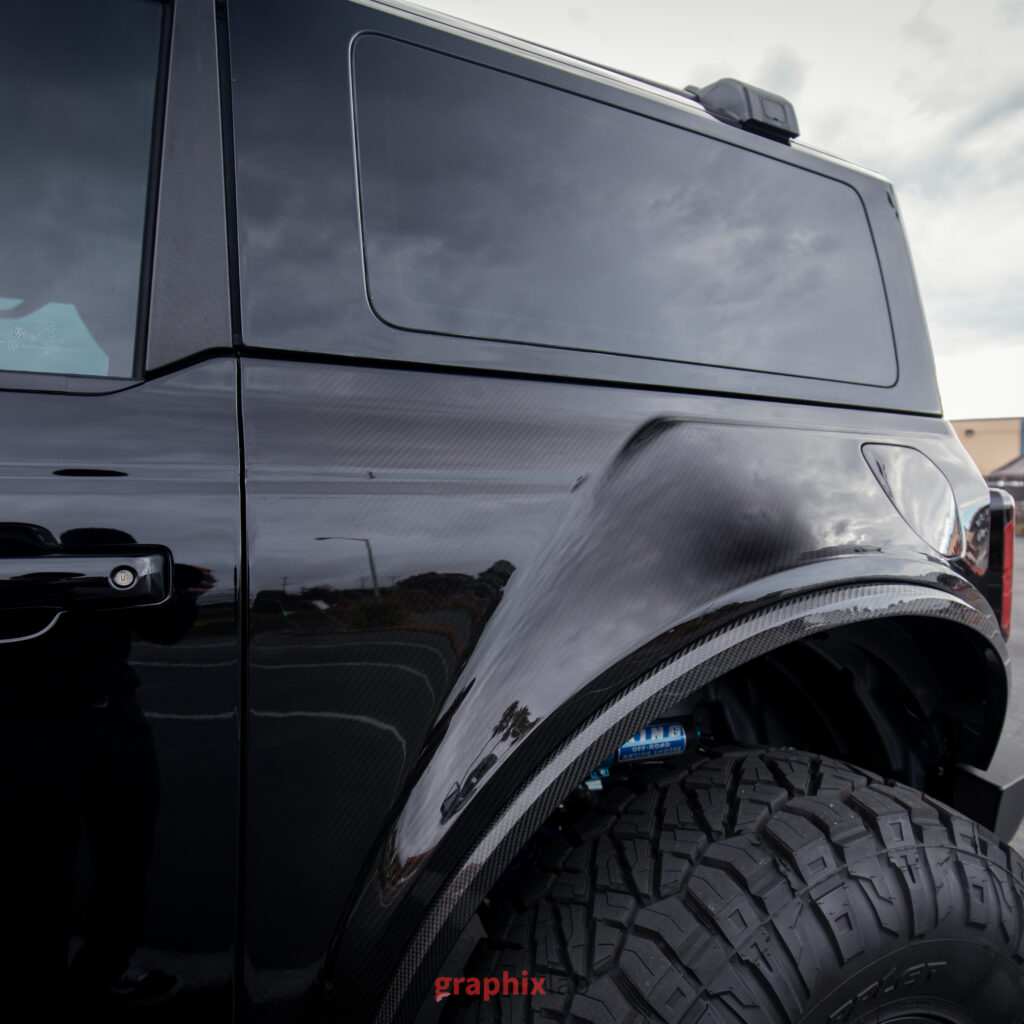
Black Ford Bronco side with a paint protection film finish

Color PPF vs Vinyl Wrap on a Cybertruck: What a Satin Black Install Showed Us

Black Ford Bronco side with a paint protection film finish

Color PPF vs vinyl wrap is the question every new Cybertruck owner in the Bay Area eventually asks, and the honest answer depends on thickness, finish and how long you plan to keep the truck. Graphix Lab recently installed full gloss black and satin black paint protection film on a Tesla Cybertruck at the South San Francisco shop, and the team compared the film to a standard vinyl wrap while the work was under way. Here is what that install showed, and how to choose between the two for your own truck.

Key Takeaways

  • Color PPF is made from thermoplastic polyurethane (TPU), a thicker material than vinyl, so it gives a nicer finish and better durability.
  • Installing color PPF takes longer than installing a vinyl wrap, and that extra time is the main trade-off.
  • A vinyl wrap is the better pick when you want a reversible color change at lower material thickness and plan to switch looks.
  • Bay Area water, humidity and rain affect how long a finish stays clean, which favors a tougher film for daily drivers.
  • Graphix Lab installs both gloss black and satin black color PPF, and matches window tint to the same vehicle in one visit.

What Is the Difference Between Color PPF and a Vinyl Wrap?

Color PPF is paint protection film that carries its color in the film itself, while a vinyl wrap is a thinner color film with little impact protection. Both change how a truck looks. Only one of them was built to take a hit from road debris.

Graphix Lab’s installer explained the shift happening in the industry: the market is improving, so instead of doing a vinyl color change, owners can now choose color PPF. The film is made from TPU, short for thermoplastic polyurethane. That material is a lot thicker than vinyl, and the thickness is what drives the better shine and durability the team pointed out while touching the finished door panel.

In an earlier post on color PPF on a Tesla Model X, the shop put the film at roughly 8 mils thick and described a rated life of 7 to 10 years, compared with 3 to 5 years for typical vinyl. The same post notes that minor swirl marks can fade with heat, because PPF self-heals. A standard vinyl wrap does not do that.

Why Is the Cybertruck a Good Test for Color PPF?

The Cybertruck is a good test because its body is made of flat, unpainted stainless steel panels, which means there is no factory paint to match and every surface shows film quality clearly. According to the Cybertruck overview on Wikipedia, the truck’s angular design is built around those stainless steel body panels.

Large flat panels make film quality easy to judge, and any lifted edge or trapped speck stands out under shop lighting. In the video, the finished doors reflect the ceiling lights in a deep black gloss, which is the result owners want to see before they sign off.

How Does a Color PPF Install Work on a Cybertruck?

A color PPF install starts with film cut to fit the panels and ends with careful hand work at every edge. In the Graphix Lab footage, the team spreads full gloss black PPF across a work bench, measures it with a tape and marks it with a pen before it goes on the truck. Green masking tape sits beside the film for edge work.

After the gloss black work, the team moves on to a satin black finish, with a technician lifting and laying the film onto the panel by hand. The shop’s guide to how paint protection film is applied covers the cleaning, polishing, cutting and curing steps that surround that moment.

Because TPU is thicker than vinyl, it takes more patience around curves and door edges. That is why the installer said a color PPF job takes a lot longer than a regular vinyl wrap.

Color PPF vs Vinyl Wrap: Side-by-Side Comparison

The table compares the two options on the points the Graphix Lab team raised on camera, plus figures from the shop’s published color PPF guide.

FactorColor PPFVinyl wrap
MaterialThermoplastic polyurethane (TPU)Vinyl
ThicknessRoughly 8 mils, a lot thickerThinner than PPF
FinishDeep shine in gloss, softer look in satinGloss, satin, matte, chrome and more
DurabilityBetter; rated 7 to 10 years by the shopUsually 3 to 5 years
Self-healingYes, light swirls fade with heatNo
Install timeA lot longerShorter

Why Does Bay Area Weather Matter When Choosing a Film?

Bay Area weather matters because water, humidity and rain all land on the car, and they affect how well a finish holds up and how clean it stays. The Graphix Lab installer made the point directly: with a lot of rain on the car, water and humidity affect your choice of film, and a tougher PPF helps your truck stay as clean as possible most of the time.

Road conditions add to it. In its guide on PPF as paint insurance, the shop lists rock chips, swirl marks, bird droppings and environmental contaminants as the everyday threats a film is meant to absorb. A color film that also resists those hazards gives a Cybertruck owner two jobs done by one install.

Should You Choose Gloss Black or Satin Black PPF?

Choose gloss black PPF for a mirror-like, wet-look shine, and choose satin black PPF for a softer, lower-sheen look that still carries the same protective film. Graphix Lab installed both on this Cybertruck, starting with full gloss black and following with a satin black finish.

The team also set up the rear of the truck to show how the logo looks in a satin finish, and promised a follow-up video on the result. That is a useful habit to copy: ask any shop to show a sample or a finished panel in the exact finish before you commit, because black films read differently under shop lights, in sunlight and at night.

Can You Match Window Tint to the Same Install?

Yes, window tint can be done in the same visit, and doing it together helps the glass and the body film look like one planned design. On the Cybertruck, Graphix Lab also installed window tinting and matched the tint to the manufacturer’s look.

The shop’s post on window tinting for Bay Area heat covers heat rejection, UV protection and privacy.

How to Decide Between Color PPF and a Vinyl Wrap

Decide by asking how long you will keep the truck, how much wear it will see and whether you want a reversible color.

  • Pick color PPF if you plan to keep the truck for years, drive it daily and want a thicker, self-healing film with a stronger finish.
  • Pick a vinyl wrap if you want the widest range of colors and finishes, a faster install and an easy way to change the look later. The shop’s guide to the full color change wrap shows what that route looks like.
  • Ask for quotes on both and compare the total with the lifespan you expect.

Where Can You Book a Cybertruck PPF Install in the Bay Area?

Graphix Lab is a certified installer at 173 S Spruce Ave in South San Francisco, CA 94080, open Monday to Friday from 9:00 am to 5:30 pm and Saturday from 9:00 am to 2:00 pm. The shop lists certification with the United Application Standards Group and offers paint protection film, color change wraps, window tint and more on its services page.

To plan a Cybertruck install, call 1 (415) 999-7080 or use the contact page, and ask to see the film in person first.

Related Resources

Frequently Asked Questions

Is color PPF better than a vinyl wrap?

Color PPF is better for durability and finish, because it is made from thicker TPU and is rated for a longer life than vinyl. A vinyl wrap is better when you want more color choices, a quicker install or an easy reversal. The right pick depends on how long you keep the vehicle.

Can you put color PPF on a Tesla Cybertruck?

Yes. Graphix Lab installed full gloss black and satin black color PPF on a Tesla Cybertruck at its South San Francisco shop. The team also matched window tint on the same truck.

How long does color PPF last?

Graphix Lab describes color PPF as rated for 7 to 10 years, against 3 to 5 years for typical vinyl. Actual life depends on the brand, storage and washing, so ask for the written warranty.

Does color PPF take longer to install than vinyl?

Yes. The Graphix Lab installer said a color PPF job takes a lot longer than a regular vinyl wrap, because the TPU film is thicker and needs more careful handling around panel edges and curves.

Does color PPF self-heal?

Yes. Color PPF carries the same self-healing surface as clear PPF, so light swirl marks can fade when sun or warm water heats the film. Deeper cuts will not heal.

What is the difference between gloss black and satin black PPF?

Gloss black PPF gives a deep, mirror-like shine, and satin black PPF gives a softer, lower-sheen look. Both use protective film, so the choice is about appearance.

Is color PPF worth it?

Color PPF is worth it if you plan to keep the vehicle for several years and want color and protection from one film. If you expect to change colors often or sell soon, a vinyl wrap may suit you better.

Pick the Film for How Long You Will Keep the Truck

The Cybertruck install made the trade-off plain: color PPF costs more time up front and returns a thicker, better-finished, more durable film, while vinyl stays the flexible choice for people who like to change their look. For a daily driver in the Bay Area, where rain, humidity and road debris all reach the paint, the tougher film earns its place. Call Graphix Lab on 1 (415) 999-7080 to book a consultation and see gloss and satin black PPF in person.

Graphix Lab’s Cybertruck full gloss black PPF walkthrough. Watch on YouTube.
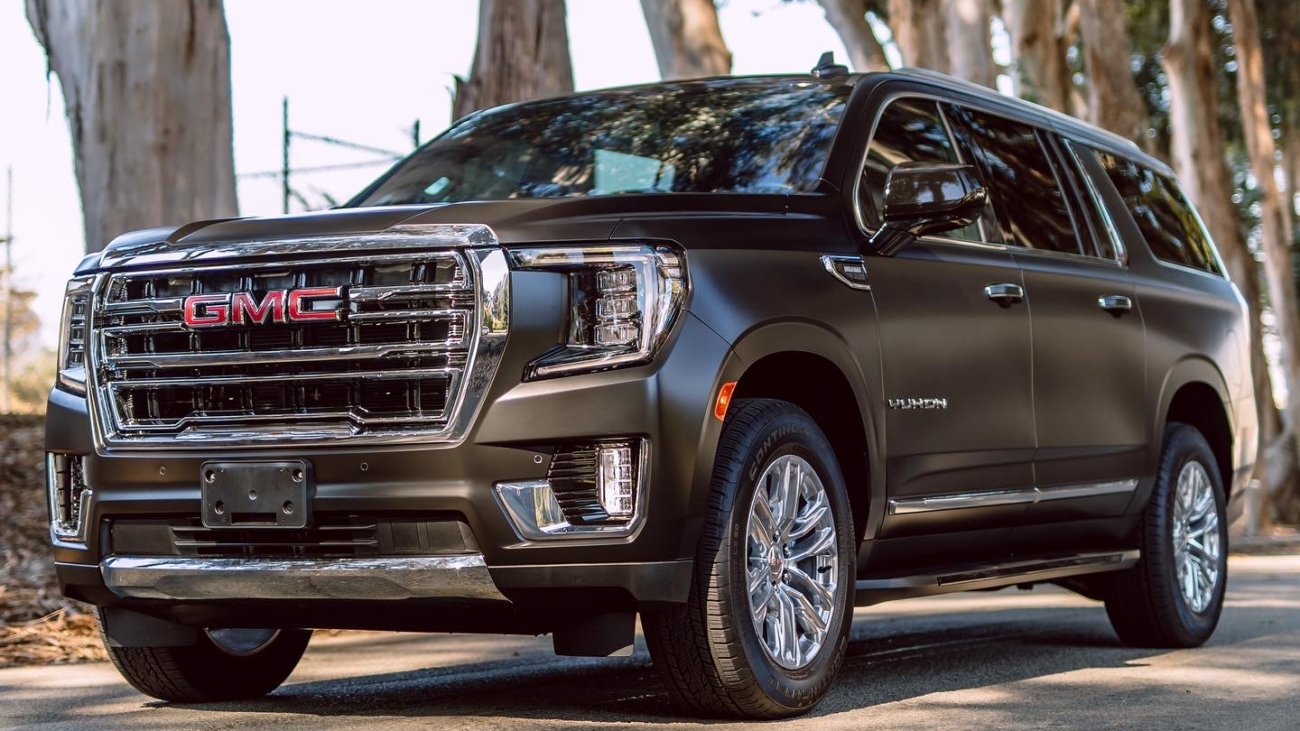
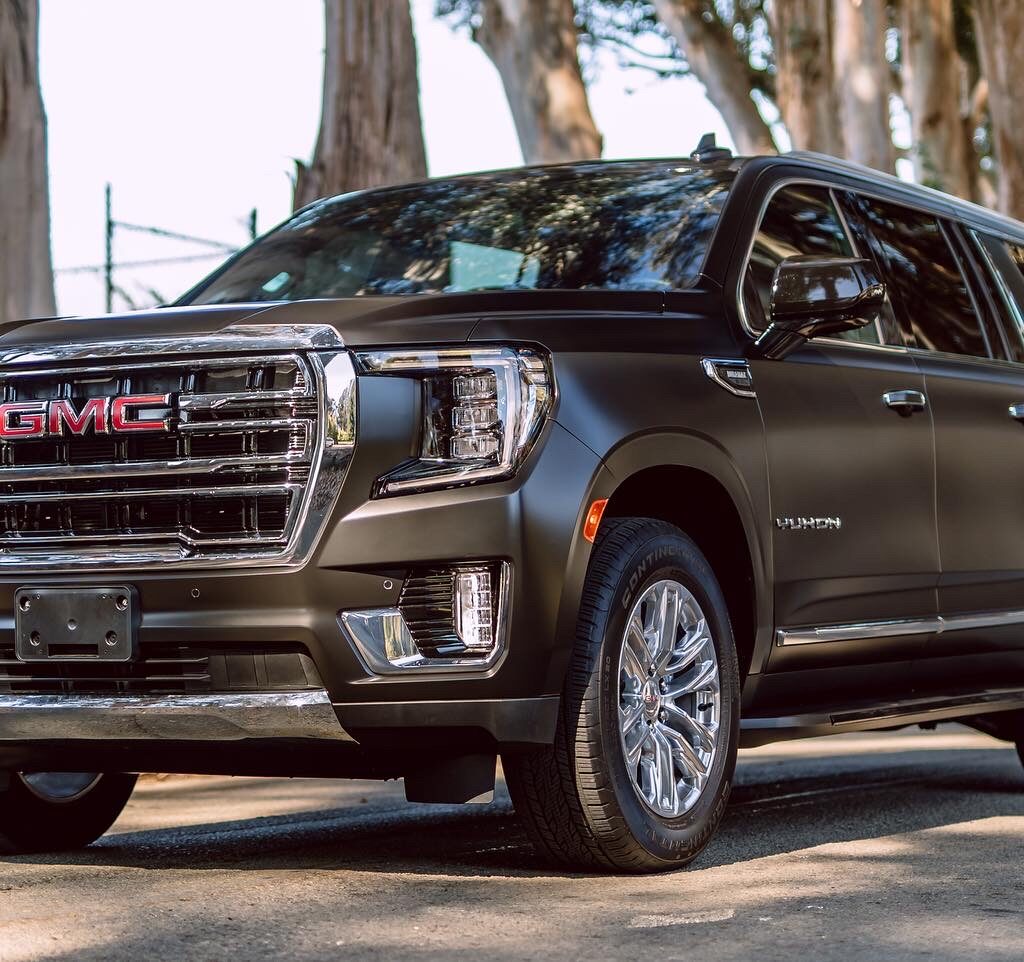
Black satin wrapped GMC Yukon SUV parked among trees

Why Your Window Tint Shop Matters as Much as the Film

Black satin wrapped GMC Yukon SUV parked among trees

Professional window tinting is only as strong as the people who cut and seat the film. Bubbles, lifted edges, uneven shade, and glare that never quite settles are usually installer problems, not product problems. If you are comparing a window tint shop for Bay Area driving, start with process, proof of past work, and legal guidance, not only the brand printed on the roll.

Graphix Lab built that standard at 173 S Spruce Ave in South San Francisco. The shop is a 3M Certified Graphics Installation Company that also works with XPEL and Ceramic Pro systems. Drivers who want window tint in San Francisco and the wider Peninsula keep coming back for ceramic film, chrome delete, PPF, and wraps because the finish holds up on real roads, not only on pickup day.

Key Takeaways

  • Professional window tinting splits value evenly between film grade and install skill.
  • California window tint laws restrict front glass, so legal guidance belongs in the quote.
  • Ceramic window tint rejects more heat and UV than dyed bargain film on Bay Area days.
  • Reviews that name staff and show finished cars beat empty five-star fluff.
  • Tint pairs cleanly with chrome delete and PPF when one shop owns the full plan.

What the Best Tint Jobs Have in Common

Walk any parking lot near Sign Hill or along the 101 corridor and you can spot the difference in seconds. A clean job has even shade across every pane, sharp cut lines at the seals, and glass that stays free of haze after heat cycles. A weak job shows dust under the film, peeling near defroster lines, or a windshield strip that looks thicker on one side than the other.

Those details come from controlled lighting, proper glass prep, correct adhesive activation, and enough time to work edges without forcing the film. At Graphix Lab, that discipline shows up across passenger cars, trucks, and higher-end builds. The same hands that tint glass also handle vinyl and protection film, which keeps multi-service jobs consistent.

Google reviews regularly name Leo and the front desk, praise clear pricing, and call out chrome delete with tint, ceramic sets, and PPF with no dust or lifted edges. That pattern matters more than any single star rating.

California Window Tint Laws Belong in the Quote

California window tint laws under Vehicle Code Section 26708 set tight limits on aftermarket film at the front of a vehicle. Darkened film on the front side windows is heavily restricted. Clear, colorless UV film that still meets visible light requirements may be allowed on those panes. Rear side glass and the back window have far more room, as long as outside mirrors give a proper rearward view.

A serious window tint shop explains this before you book, not after a citation. The goal is a look that fits your car and still keeps you legal on Peninsula freeways. Graphix Lab’s window tint services include that guidance so you do not leave with a shade that looks right in the bay and fails at a checkpoint.

If you already carry illegal film from another installer, ask about removal and a legal rebuild. Fixing a bad front set is cheaper than stacking tickets and still driving with glare and heat that never improved.

Glass areaPractical California note
WindshieldOnly a limited top strip under seat-height rules; full darkened windshield film is not allowed.
Front side windowsDark aftermarket film is tightly limited; clear UV film may qualify when light transmission stays legal.
Rear side windowsMuch more freedom on darkness level behind the driver.
Back glassGenerally open on darkness when dual outside mirrors provide the required rear view.

Ceramic Window Tint vs Cheap Film on Bay Area Days

South San Francisco weather swings hard. Morning fog near the bay can give way to hard sun on I-280 by lunch. Dyed films darken the glass and stop some glare, then fade, turn purple, and still leave the cabin hot. Ceramic window tint uses non-metal particles that reject more infrared heat and block a high share of UV without choking phone or GPS signals.

That is why many local drivers ask for ceramic sets when they book professional window tinting for Bay Area heat. Cooler seats, less AC load, and interiors that hold color longer are the everyday payoff. Privacy on rear glass helps when you park near BART or busy lots.

Cut quality still decides whether those benefits last. Window tint bubbles, haze, and peeling show up when prep is rushed, even on a premium ceramic roll.

How to Read Reviews Without Getting Fooled

Star averages help, but the body of each review tells you more. Look for:

  • Specific services named: ceramic tint, chrome delete, PPF, full wrap.
  • Staff names and how problems were handled after pickup.
  • Photos of finished cars in daylight, not only dim garage shots.
  • Repeat customers who brought a second vehicle.
  • Notes on appointment timing, communication, and price clarity.

Graphix Lab’s public feedback fits that pattern. Owners praise communication before the job, clean installs, and a team that fixes small issues without argument when something needs a second pass. Another recurring theme is talking through options instead of being pushed into the darkest film on every pane.

When a shop will not show recent work, skips legal limits, or undercuts every certified installer by a wide margin, treat that as a signal. Cheap film and rushed labor often cost more after a redo.

Pairing Tint With Chrome Delete and Paint Protection

Many drivers want a full stealth package, not tint alone. A chrome delete blacks out bright trim so the glass shade and body lines match. Paint protection film on the hood, fenders, and bumper nose takes rock chips that Bay Area freeways throw every week. Ceramic coating then makes wash days faster.

Doing those pieces at one location keeps color, gloss level, and cut quality aligned. Graphix Lab’s portfolio covers color change wraps, commercial fleet branding, PPF, ceramic coating, light tints, and window film under one roof. That matters when you want Mercedes, BMW, or Tesla glass and trim to read as one finished build.

If your plan is staged, ask the shop to map the order. Tint and chrome delete often land together. Full PPF may come first on a new car so the film sits on clean factory paint.

What a Visit to Graphix Lab Looks Like

The shop sits at 173 S Spruce Ave in South San Francisco, with weekday hours from 9:00 am to 5:30 pm and Saturday hours from 9:00 am to 2:00 pm. Sunday is closed. You can reach the team at graphixlabsf@gmail.com or 1 (415) 999-7080 to book.

Expect a walk-through of shade options against your glass, a legal check for front panes, and a clear scope for any add-ons. Bring photos of looks you like. If you already run PPF or a wrap, say so, because film edges need care around existing work.

After install, give the film the cure window your installer specifies before rolling windows fully down or running automatic car washes. If something looks off during that window, call the shop early so a corner can be fixed before the adhesive fully sets.

Related Resources

Frequently Asked Questions

How long does professional window tinting usually take?

Most passenger cars finish in a few hours once glass is prepped and the film is cut. Full ceramic sets, large SUVs, or jobs combined with chrome delete can take longer. Ask for a time window when you book so pickup planning stays realistic.

Is ceramic tint worth it over standard dyed film?

For Bay Area heat, UV load, and signal clarity, ceramic film is the stronger daily driver choice. It costs more up front and usually holds color and heat rejection longer than dyed film that fades and warms the cabin.

Can Graphix Lab match tint with a chrome delete on the same visit?

Yes. Many customers book both so the glass shade and blacked-out trim land as one look. Confirm the sequence during the quote so cure times and handling rules stay clear.

Will dark tint on my front windows pass California law?

Dark aftermarket film on front side windows is heavily restricted under Vehicle Code Section 26708. Clear UV film may qualify when light transmission stays legal. A shop that knows local rules will steer you before installation.

What should I do in the first days after tint is installed?

Follow the cure guidance from your installer. Keep windows up as directed, avoid automatic washes until cleared, and report any lifting or haze early so the shop can correct it while the adhesive is still settling.

Book Professional Window Tinting You Can Trust

Not every bay will treat your car the same way, and that is the point. Film brands matter, but so do cut quality, California compliance advice, and a team that answers when a corner needs attention. If you want professional window tinting with ceramic options, a proven window tint shop process, chrome delete, and protection film under one certified roof, schedule a visit with Graphix Lab in South San Francisco and bring the car you actually drive every day.

Commercial Branding Solutions

Beyond Vehicle Protection: Commercial Branding Solutions from San Francisco’s Trusted Wrap Experts

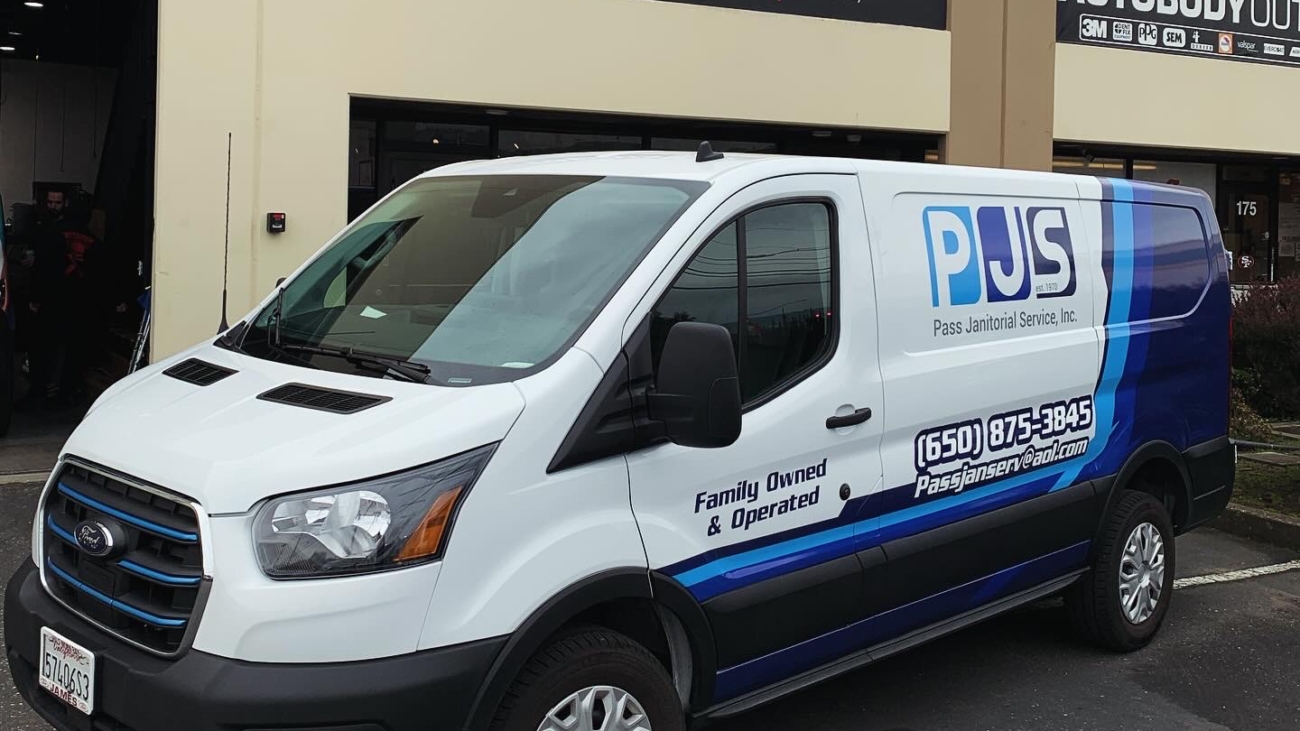
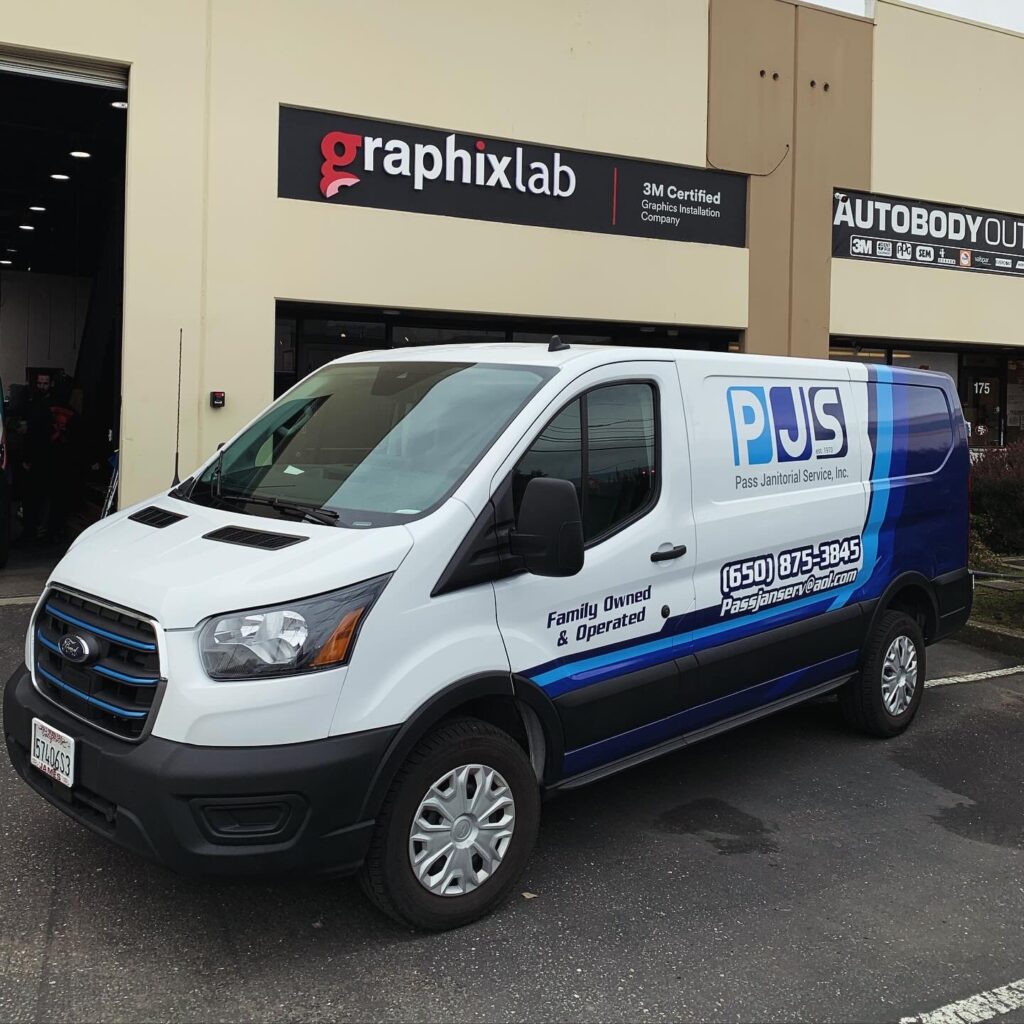
White Ford Transit van with PJS commercial branding outside Graphix Lab

For years, Graphix Lab has been the name South San Francisco car owners trust for paint protection film, window tinting, and show-stopping custom wraps. Our client list of Ford, Mercedes-Benz, Rivian, Cadillac, McLaren Racing, and even San Mateo County speaks to a level of craftsmanship built one vehicle at a time. But there’s a side of our business that fewer people know about, and it might be exactly what your company needs: full commercial branding solutions.

If you’ve only thought of us as the shop that protects your personal ride, it’s time to look closer. Businesses across the Bay Area are turning to car branding specialists like Graphix Lab to turn everyday vehicles into moving billboards, and the results are changing how they get found, remembered, and trusted by new customers.

Why Vehicle Branding Belongs in Every Business’s Marketing Plan

A single work van, parked at a job site or idling at a stoplight in traffic, gets seen by thousands of eyes a day. Unlike a social media ad that disappears after a scroll or a billboard that only reaches drivers on one stretch of highway, a branded vehicle travels with you. It advertises your business at every delivery, every client visit, and every commute.

According to vehicle wrap advertising data compiled by 4OVER4, citing the Outdoor Advertising Association of America, a single wrapped vehicle can rack up tens of thousands of daily impressions at one of the lowest costs per view of any advertising medium, largely because the investment is made once and the advertising keeps working for years. For small and mid-sized businesses in San Francisco’s competitive market, that kind of always-on visibility is hard to beat with any other channel.

This is where our expansion into commercial work comes in. The same precision, certified materials, and attention to detail that we bring to a Ferrari or a Lambo now extends to fleet vans, box trucks, service vehicles, and company cars across the city.

From Personal Passion Projects to Full Commercial Vehicle Graphics Wraps

Our roots are in custom vinyl wraps, chrome delete, paint protection film, and window tints for car enthusiasts who want their personal vehicle to reflect their style. That experience turned out to be the perfect foundation for commercial vehicle graphics wraps. The skills required to align a wrap perfectly across complex curves, avoid bubbling around door handles, and make a design look clean from every angle are the exact same skills needed to make a company logo pop on the side of a delivery van.

We’re certified installers with 3M and XPEL, and we hold certification through the United Application Standards Group, so the materials and techniques used on a commercial fleet project meet the same bar we set for luxury and performance vehicles. That matters, because a cheap or poorly installed commercial wrap doesn’t just look unprofessional. It peels, fades unevenly, and can end up costing more in reprints and reinstalls than a proper job would have in the first place.

What Custom Commercial Vehicle Wraps Can Do for Your Brand

When business owners come to us asking about custom commercial vehicle wraps, they’re usually trying to solve one of a few problems: they want their fleet to look more professional, they want more visibility in a specific neighborhood or service area, or they simply haven’t updated their branding in years and it shows. A well-designed wrap can address all three at once.

Here’s what a commercial wrap project through Graphix Lab typically includes:

  • Full brand consultation. We look at your logo, color palette, and messaging to design a wrap that actually represents your business, not just a logo slapped on a white van.
  • Design mockups before installation. You see exactly how the finished wrap will look on your specific vehicle before any vinyl gets cut.
  • Premium, certified materials. The same 3M and industry-leading vinyl we use on personal vehicles goes into every commercial job, built to hold up against weather, sun exposure, and daily driving.
  • Precision installation. Clean seams, properly wrapped edges, and no visible bubbling, so the finished product looks like it was painted on.
  • Fleet consistency. If you’re branding more than one vehicle, we make sure every van, truck, or car in your fleet carries a matching, cohesive look.

Whether you need a single vehicle wrapped for a new business launch or an entire fleet refreshed to match a rebrand, the process is built to minimize downtime while maximizing the finished quality. You can see examples of our fit and finish across past projects in our wrap portfolio.

Vinyl Wrap San Francisco Businesses Are Choosing Over Paint

One question we hear constantly from business owners is why wrap instead of paint. The honest answer is that a vinyl wrap in San Francisco companies almost always makes more financial and practical sense for commercial use.

A quality vinyl wrap protects your vehicle’s factory paint underneath, which helps preserve resale value. It can be updated or changed far more easily than a repaint if your branding evolves, your business rebrands, or you simply want to refresh the look after a few years. And compared to a full custom paint job, wraps are typically faster to install and less expensive, which means less time your vehicle sits out of service and more time it’s out on the road working for your business.

For companies running multiple vehicles, this flexibility is a genuine advantage. You can wrap one van as a pilot, evaluate how it performs, and then roll the same design out across the rest of the fleet with confidence.

Not Just Wraps: A Full Commercial Graphics Partner

Commercial branding isn’t only about wrapping an entire vehicle in a design. Sometimes the right solution is more targeted, and we offer a full range of options depending on your budget and goals:

  • Partial wraps and decals for businesses that want brand visibility without the cost of a full wrap
  • Window tinting for company vehicles, adding a polished look while protecting interiors and occupants
  • Chrome delete and trim accents to give a fleet a more modern, cohesive appearance
  • Striping and lettering for a cleaner, more corporate look on service vehicles
  • Paint protection film to keep company vehicles looking newer for longer, which matters when your vehicle is a direct reflection of your brand

This flexibility means whether you’re a solo contractor with one pickup truck or a company managing a dozen delivery vans, there’s a commercial graphics solution sized to fit your business.

Why Businesses Choose Graphix Lab for Car Wrap San Francisco Projects

There’s no shortage of vinyl shops in the Bay Area, but businesses looking for a car wrap in San Francisco partner keep coming back to Graphix Lab for a few reasons.

First, we’ve already earned the trust of major automotive and organizational brands, which means we understand what it takes to represent a name at a high standard. Second, our team, led by Leo and Maire, has built a reputation for communication and follow-through. When something needs adjustment after installation, we make it right quickly, which matters even more on a commercial account where downtime affects your operations, not just your weekend plans.

Third, we’re not a wrap shop that dabbles in commercial work on the side. As demand from Bay Area businesses has grown, we’ve built out the capacity, design process, and materials sourcing to handle commercial projects properly, from a single branded work truck to coordinated fleet rollouts.

Ready to Put Your Brand on the Road?

Your vehicles are already out there every day, driving to job sites, making deliveries, and parking outside client locations. The only question is whether they’re working for your brand or just getting you from point A to point B.

If you’re ready to look into vehicle wraps businesses are using to stand out, or you simply want to talk through options for a fleet refresh, our team at Graphix Lab is ready to help. From initial design consultation to final installation, we bring the same certified craftsmanship to your commercial fleet that we bring to every vehicle in our shop.

Get in touch with Graphix Lab today to start turning your company vehicles into your most consistent, cost-effective marketing tool on the streets of San Francisco.

Graphix Lab LLC 173 S Spruce Ave, South San Francisco, CA 94080 Call: 1 (415) 999-7080 Hours: Mon–Fri 9:00 am–5:30 pm, Sat 9:00 am–2:00 pm

Gray Porsche 911 GT3 with paint protection film in the Graphix Lab shop

Behind the Scenes at Graphix Lab: Elevating and Protecting Your Ride in South San Francisco

Gray Porsche 911 GT3 with paint protection film in the Graphix Lab shop

Whether you’re cruising past Sign Hill or navigating the busy freeways of the Bay Area, you’ve likely seen our work turning heads on the road. For over nine years, Graphix Lab has been taking the South San Francisco automotive scene by storm. Located right here at 173 S Spruce Ave, we have become the premier destination for high-end vehicle customization, commercial fleet branding, and elite paint protection. We are proud to be part of the South San Francisco community.

At the Lab, we don’t just work on cars—we transform them. We treat every vehicle that rolls through our doors with surgical precision. Here is a look at the elite services we offer to keep your vehicle looking showroom-ready while making sure your personal style (or business brand) stands out from the crowd.

1. Custom & Color Change Vinyl Wraps

Why settle for factory paint when you can have a finish that truly reflects your personality? We offer thousands of color options and finishes from the industry’s leading premium vinyl brands, making the possibilities virtually endless.

  • Color Change Wraps: Step up your game with stunning matte, gloss, satin, chrome, carbon fiber, brushed, or reflective finishes.
  • Custom Graphics & Accents: Want something entirely unique? Our design team can replicate almost any decal or create custom automotive art tailored specifically to your vehicle’s lines.
  • Partial Wraps: Perfect for adding a sleek gloss-black roof, a carbon fiber hood, or accents that give your ride an aggressive edge without a full transformation.

2. Commercial Fleet Branding & Mobile Billboards

If you’re a business owner, your company vehicle shouldn’t just transport you from job to job—it should be actively working for you. We specialize in high-impact commercial wraps that turn cars, delivery vans, box trucks, and entire fleets into 24/7 mobile billboards.

  • Full & Partial Commercial Wraps: High-visibility designs meticulously crafted around the contours of your vehicle to ensure your logo and message are instantly readable.
  • Clean Decals & Lettering: Clean, professional spot graphics and contact info perfect for a subtle yet authoritative corporate presence.

The Commercial Advantage: A professionally wrapped vehicle builds instant recognition, credibility, and trust. It generates thousands of local impressions daily without the ongoing ad spend of traditional marketing.

3. Elite Paint Protection Film (PPF) & Ceramic Coatings

Bay Area roads can be tough. Between loose gravel, highway debris, and unpredictable weather, your factory finish is constantly under siege. As certified premium installers, we never cut corners when it comes to safeguarding your investment.

  • Paint Protection Film (PPF): We apply high-quality, virtually invisible clear urethane film (including top-tier self-healing brands like STEK). It guards against rock chips and scuffs, and minor swirl marks completely disappear on their own with a little warmth. We pride ourselves on precision-cut patterns that wrap seamlessly around edges, making the film undetectable.
  • Ceramic Coatings: Looking for that deep, glass-like finish? Our cutting-edge ceramic coatings offer an unparalleled shield against UV rays, bird droppings, and environmental contaminants, ensuring your car stays cleaner for longer and is incredibly easy to wash.

4. Premium Window Tinting, Light Tints, & Chrome Delete

Comfort, privacy, and style come together seamlessly in our finishing lab.

  • Ceramic Window Tinting: We don’t just darken your glass; we provide premium style and protection. Our professional-grade ceramic films block up to 99% of harmful UV rays and offer superior heat rejection—keeping your interior cool and protecting your passengers from the California sun.
  • Light Tints: Give your vehicle a cohesive, aggressive look with custom tints for your headlights, taillights, and fog lights that maintain clean brightness.
  • Chrome Delete: Want to cool your chrome? We can mute out bright factory trim with a sleek gloss or satin black finish for a clean, modern “stealth” look that lasts.

Experience the Graphix Lab Difference

We know that your vehicle is a major investment, and for many, it’s also your livelihood. That’s why we emphasize a tailored, stress-free experience. From compact Teslas and high-end performance sports cars to massive commercial utility trucks, our elite staff balances creative design with flawless installation to deliver results that exceed expectations.

Ready to take your ride to the next level?

Gray box van with Prevalent Projects commercial vehicle graphics

Drive Your Brand Forward: Why Commercial Vehicle Wraps are a Game-Changer for South San Francisco Businesses

Gray box van with Prevalent Projects commercial vehicle graphics

As a business owner in the fast-paced San Francisco Bay Area, you are constantly looking for ways to outpace the competition. Whether you run a local plumbing business, a boutique catering service, or manage an entire corporate delivery fleet, one question always remains: How do I get my brand in front of more customers without breaking the bank?

The answer is sitting right in your driveway or parking lot.

At Graphix Lab, located right here at 173 S Spruce Ave in South San Francisco, CA, we turn ordinary work trucks, vans, and cars into 24/7 mobile billboards. If you’ve been searching for the highest quality commercial vehicle wraps in South San Francisco, here is why a custom wrap from “The Lab” is the single best investment you can make for your business this year.

1. Non-Stop Local Brand Exposure

Traditional advertising like digital ads, mailers, and billboards require ongoing monthly payments to keep your business visible. But a custom car wrap or fleet wrap is a one-time investment that works for you every single day.

When your wrapped vehicles are cruising down El Camino Real, navigating the traffic on Highway 101, or parked outside a client’s home in San Mateo or Daly City, thousands of potential customers are seeing your logo, phone number, and services. You aren’t just driving; you’re building hyper-local brand awareness.

2. A Solution for Every Fleet Size

No job is too big or too small for our elite installation team. We provide a massive range of business branding services tailored to your specific budget and goals:

  • Full Vehicle Wraps: Maximize your real estate with a complete, bumper-to-bumper transformation that commands attention on Bay Area roads.
  • Partial Vehicle Wraps: Seamlessly blend your vehicle’s factory paint with custom graphics for a striking, cost-effective look.
  • Custom Decals & Lettering: Clean, professional spot graphics, logos, and contact info perfect for a subtle yet authoritative corporate presence.

From compact Teslas and delivery vans to massive box trucks and utility vehicles, we have the specialized experience to wrap any make or model.

3. Certified Quality and Unrivaled Craftsmanship

We get it—your commercial vehicles represent your livelihood. A peeling, bubbly, or poorly aligned wrap looks unprofessional and reflects badly on your business. That is why you shouldn’t trust your fleet to just anyone.

For over 9 years, Graphix Lab has been taking the Bay Area by storm. We are certified installers who partner with only the industry’s best premium supply and vinyl brands. Our meticulous attention to detail ensures that your commercial graphics fit the complex contours and deep recesses of your specific vehicle flawlessly. Plus, our wraps act as a protective layer, guarding your vehicle’s factory paint against road debris and scratches—preserving its resale value down the line!

4. Seamless, Stress-Free Process

We know that a vehicle sitting in a shop is a vehicle that isn’t making you money. We pride ourselves on offering a seamless, professional experience from the moment you text or call us to the moment you drive out of our shop:

Consultation & Design: We collaborate with you to create striking, high-visibility graphics that cleanly communicate your brand identity.

Flawless Installation: Our certified team preps, cuts, and installs your wrap with surgical precision.

Drive & Grow: You hit the highway with a professional new look that immediately starts generating inbound leads.

Ready to Transform Your Business Vehicles?

Stop driving a blank canvas. Let the experts at Graphix Lab LLC turn your company vehicles into your most effective sales tools.

Check out the video below of a commercial wrap we did on a Ram ProMaster! 

Deep green wrapped BMW X3 SUV parked beside a garage

Beat the Bay Area Heat: Why Professional Window Tinting is a Must for Your Car

Deep green wrapped BMW X3 SUV parked beside a garage

Living in South San Francisco, we get a little bit of everything when it comes to weather. One minute you’re driving through the morning fog near Sign Hill, and the next, the sun is blazing down on I-280.

While we love the California sunshine, it can take a serious toll on your vehicle and your driving comfort. That’s where professional window tinting comes in. At Graphix Lab, located right here in South San Francisco, CA, we don’t just apply film to glass—we provide premium style, comfort, and protection for your ride.

If you’ve been searching for the best window tinting in South San Francisco, here is why high-quality tint should be your vehicle’s next upgrade.

1. Superior Heat Rejection and Driving Comfort

We’ve all experienced it: stepping into a car that’s been parked outside for a few hours and feeling like you just walked into an oven. Premium window tint acts as a shield for your vehicle. By blocking a massive percentage of solar energy, high-quality ceramic tint keeps your cabin significantly cooler. That means less reliance on your AC, better fuel efficiency, and a much more comfortable commute down the Peninsula.

2. Protect Your Interior from UV Damage

The California sun is relentless, and UV rays are the number one enemy of your car’s interior. Over time, prolonged exposure causes dashboards to crack, leather to dry out, and fabric upholstery to fade. Our professional-grade window films block up to 99% of harmful UV rays, preserving your car’s resale value and keeping the interior looking showroom-ready.

3. Enhanced Privacy and Security

Whether you’re parked at the grocery store or leaving your car at the BART station, keeping your belongings out of sight is a top priority. Window tinting adds a clean, dark aesthetic that makes it difficult for outsiders to peer into your back seat or cargo area. It’s an easy, effective way to gain peace of mind every time you park.

4. Shatter Protection and Safety

Accidents happen, but window film adds an extra layer of defense. In the event of an impact, the tint film helps hold shattered glass together instead of letting it spray into the cabin. This protects you and your passengers from flying shards.

Ready to Upgrade Your Ride?

Don’t let the summer sun fade your interior or ruin your daily drive. Give your vehicle the protection, privacy, and sleek look it deserves.

If you are looking for professional window tinting near South San Francisco, Daly City, San Bruno, or the wider Bay Area, look no further than Graphix Lab.

Check out the window tint we applied on this Toyota Camry!

Front of a black Mercedes-Benz G-Class SUV with circular headlight

Cruising 101 Without the Chips: Why Paint Protection Film (PPF) is a Must for Bay Area Drivers

Front of a black Mercedes-Benz G-Class SUV with circular headlight

Whether you are navigating the daily commute on Highway 101, dealing with unpredictable Peninsula weather, or parking near the breezy coast, your vehicle’s paint job is constantly under siege. Between flying gravel, road debris, and harsh environmental elements, keeping that showroom shine can feel like a losing battle.

At Graphix Lab, located right here in South San Francisco, CA, we see the damage Bay Area roads can do to a vehicle every single day. If you’re looking for the ultimate way to protect your investment, Paint Protection Film (PPF)—often called a “clear bra”—is the absolute gold standard.

Here is a look at the major pros of installing PPF on your vehicle and why it’s a game-changer for local drivers.

1. Defies the Hazards of the Road (Unmatched Rock Chip Protection)

If you’ve ever driven past San Francisco International Airport or through the industrial stretches of San Mateo County, you know that loose gravel and road debris are a constant threat.

  • The Barrier: PPF is a thick, high-grade polyurethane film (roughly 8 mils thick) that acts as an invisible shield.
  • The Benefit: It absorbs the impact of rocks, road salt, and debris, ensuring that your factory paint underneath remains entirely untouched.

2. Magic Self-Healing Technology

One of the most incredible advancements in modern car paint protection is the self-healing properties of premium films (like the elite STEK and XPEL films we use at the Lab).

How it works: When the film is exposed to heat—whether from the California sun or a splash of warm water—the top layer of the film naturally relaxes. Swirl marks from washing, light scratches, and scuffs completely disappear on their own, keeping your car looking freshly detailed.

3. Preserves Your Vehicle’s Resale Value

Vehicles in the San Francisco Bay Area hold excellent value, but only if they are meticulously maintained. A front bumper riddled with rock chips or etched by bird droppings and tree sap will instantly tank your vehicle’s trade-in or private-party resale value.

By investing in professional PPF installation in South San Francisco, you are locking your car’s paint in a time capsule. When it comes time to sell or return your lease, the film can be cleanly removed to reveal flawless, factory-fresh paint beneath.

4. Invisible Finish or a Total Style Transformation

Are you worried that a clear bra will ruin the sleek lines of your brand-new Tesla or luxury cruiser? Don’t be.

Our precision-cut patterns are designed to wrap around the edges seamlessly, making the film virtually undetectable. However, if you want to switch things up, we also offer Color PPF and matte/stealth finishes. You get all the heavy-duty protection of standard PPF, but with a deep, mirror-like pigment or a satin finish that completely transforms your ride’s aesthetic—lasting twice as long as traditional vinyl wraps.

See the Process: PPF on a Rivian R1S

Clear PPF with a stealth finish? Yes, please! Check out the video below.

Our quality Paint Protection Film on this Rivian R1S comes with a 10-year warranty and solid protection from road debris that pays off. 

Come visit us in South San Francisco and see what we can do for your ride!