
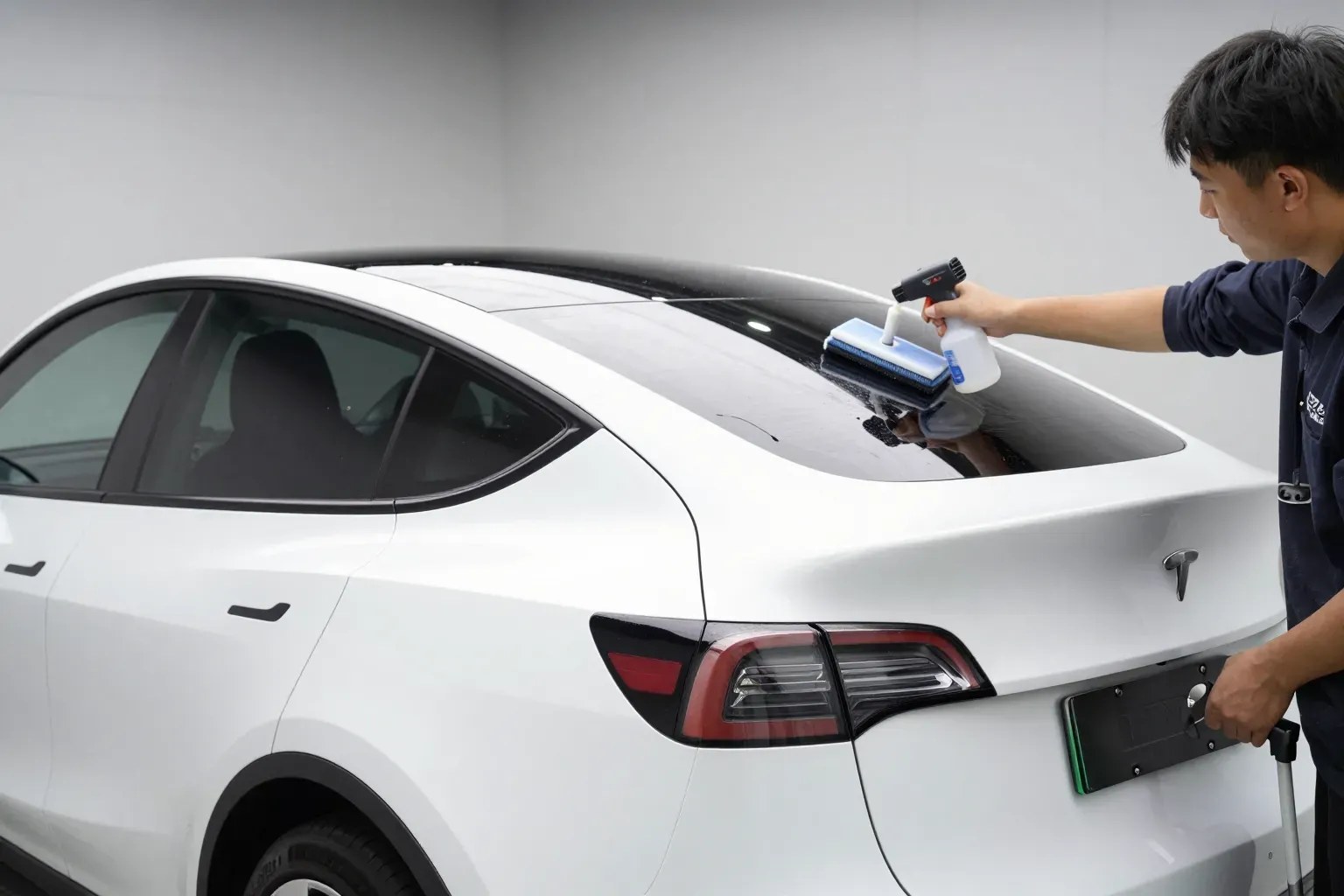
Tesla Model Y window tint looks like a simple job from the outside, because film goes on glass. Inside our South San Francisco shop it is a chain of small decisions, and each one decides whether the tint still looks flat and clean years from now. We filmed a full XPEL ceramic tint install on a Model Y, from the first cut to the final squeegee pass. This guide walks through what the video shows and why every step is there, and it doubles as a checklist for judging any installer.
Key Takeaways
- A careful Model Y tint install starts with film cut by computer, slightly larger than each window, then finished by hand.
- Dust and lint trapped under film cause rough finishes, so the glass is cleaned several times before the film goes on.
- Heating the film and molding it to the curve of the glass helps it sit flat instead of channeling or lifting later.
- XPEL ceramic tint blocks over 99 percent of harmful UV rays, which protects seats and trim as well as the people inside.
- California limits tint on front side windows, so the shade for each window should be confirmed before you book.
Step 1: The Film Is Computer Cut, Then Finished by Hand
The install in the video starts at the cutting station, not at the car. The team runs a computer cut on the XPEL film, working from a pattern for the Model Y’s windows. The cut comes out a little bigger than the actual window on purpose. That extra margin lets the installer file the edges by hand, so the film runs all the way to the end of the glass and finishes nice and smooth.
A computer cut also means the film arrives at the car already shaped to the window. The edge matters more than most buyers expect. A clean, even edge is the first thing you notice on a good job and the first thing that lifts on a weak one. We describe the same signs in our guide on why the tint shop matters as much as the film: even shade across every pane and sharp cut lines at the seals.
Step 2: The Glass Is Cleaned Until No Dust or Lint Is Left
Before any film touches the window, the installer sprays and wipes the glass, then does it again. In the video he repeats the cleaning a few times to make sure no dust or lint is left on the surface. Window glass traps lint easily, and anything left behind ends up sealed between the glass and the film, where it shows as specks you can see in direct sunlight.
This is the least glamorous step, and it is a big reason a Tesla Model Y ceramic tint job looks flawless on pickup day. A shop that rushes the prep cannot fix it afterward without pulling the film and starting over.
Step 3: The Film Is Heat Molded to the Curve of the Window
Once the glass is clean, the team does something many DIY installs skip. They preheat the film with a heat gun and mold it to the window. Car glass is not flat, and the Model Y’s side windows carry a slight curve. Film that has not been shaped to that curve tends to fight the glass.
As the team explains on camera, shaping the film first is what keeps channeling out of the tint in the future. In plain terms, the film learns the shape of the window before it is applied, so it settles flat instead of lifting at the edges as the car goes through heat cycles.
Step 4: One Last Squeegee Pass, Then the Tint Goes On
With the film shaped, the installer squeegees the water off the glass one more time and only then applies the tint. That final pass clears loose water from the window before the film is positioned, so there is less moisture to chase out afterward.
Why XPEL Ceramic Tint Protects the Car, Not Only the People Inside
One line from the video is worth repeating. Tint is not just for you, it is for the car too. Many new cars come with light or brightly colored seats, and if UV rays hit them for long enough, the color can fade and change. Tint that blocks UV slows that process, which helps the interior look newer for longer and helps protect resale value.
XPEL states that its PRIME window tint blocks over 99 percent of harmful UV rays, and the brand’s automotive window tint range also targets heat rejection and glare. Ceramic film is non-metallic, so it does not interfere with phone, GPS or Bluetooth signals, which matters in a car as connected as a Tesla. Bay Area weather makes this practical: morning fog can give way to hard sun on I-280 by noon, a pattern we cover in our post on beating the Bay Area heat with professional tint. If you are weighing ceramic against cheaper film, our ceramic tint comfort and clarity breakdown shows what the upgrade buys you.
California Tint Law and Your Model Y
Shade is the one decision the video does not cover, and in California it is regulated. Under Vehicle Code Section 26708, aftermarket material on the front side windows is limited to clear, colorless film with a minimum visible light transmittance of 88 percent. The glass with film applied must still meet the federal 70 percent light transmittance standard, and the driver must carry a certificate signed by the installing company. Rules for rear side glass and the back window are looser, but they are still worth confirming.
The practical advice is simple. Ask your installer which film and shade is legal for each window of your Model Y, get any required certificate in writing, and treat that conversation as part of the quote.
The Four Steps at a Glance
| Step | What the team does | What it helps prevent |
|---|---|---|
| 1. Computer cut | Film is cut slightly larger than the window and the edges are filed by hand | Gaps, ragged edges and blade marks near the glass |
| 2. Glass prep | The window is sprayed and wiped several times | Dust and lint trapped under the film |
| 3. Heat molding | Film is preheated and shaped to the curve of the glass | Channeling and lifting later on |
| 4. Final squeegee and apply | Water is squeegeed once more, then the film is applied | Moisture left under the film and an uneven finish |
What to Ask Any Installer Before You Book Model Y Tint
You do not need to be a tint expert to compare shops. These questions come straight from the steps above, and a good installer will answer them without hesitation:
- Is the film cut by computer, or cut on the glass?
- How many times is each window cleaned before the film goes on?
- Is the film heat molded to curved glass before it is applied?
- Which XPEL film and shade will go on each window, and is that shade legal in California?
- What happens if lifting or bubbling shows up after the install?
After the Install: The 10 to 15 Day Check-Up
Tint is not finished when you drive away. Film settles over the first days, so we bring every client back for a 10 to 15 day check-up. We inspect for lifting, bubbling or other issues, review how the film is performing, and fix anything that needs attention.
You can see the full range of work we do on our services page, including paint protection film and wraps. Graphix Lab is at 173 S Spruce Ave, South San Francisco, CA 94080, open Monday to Friday 9:00 am to 5:30 pm and Saturday 9:00 am to 2:00 pm. You can contact the shop or call 1 (415) 999-7080 to ask about tint for your car.
Related Resources
- Why your window tint shop matters as much as the film
- Beat the Bay Area heat with professional window tinting
- Ceramic tint comfort and clarity on a Honda
- Window tinting that does more than look cool
- Graphix Lab services
- XPEL automotive window tint
- California Vehicle Code Section 26708
Common Questions About Tesla Model Y Window Tint
1. Is ceramic tint worth it on a Tesla Model Y?
For most owners, yes. Ceramic film is built to cut heat and block UV without metal layers, so it does not interfere with signals. It also protects seats and trim from fading, which the video highlights as a benefit for the car itself.
2. Why is the film cut bigger than the window?
The oversize cut gives the installer room to file the edges by hand. That is how the film reaches the very end of the glass and finishes smooth, instead of leaving a gap or a rough line.
3. Can I tint every window on my Model Y in California?
Not to any shade you like. Front side windows are tightly limited under California law, while rear side glass and the back window are treated differently. Ask the installer to confirm the legal shade for each window and put it in the quote.
4. Will tint stop my interior from fading?
It slows it down. XPEL says its PRIME film blocks over 99 percent of harmful UV rays, and UV is what fades and changes the color of seats over time. Tint reduces that exposure but does not replace normal interior care.
5. What happens at the 10 to 15 day check-up?
We inspect the film for lifting, bubbling or other issues as it settles, talk through how it is performing, and make adjustments where needed. The details are in our post on the check-up process.
Great Model Y Tint Is Made in the Prep
The steps in the video are quiet ones: a computer cut, repeated cleaning, heat molding and one more squeegee pass. Together they decide whether Tesla Model Y window tint stays flat, clear and tight to the glass for years. If you want that level of care on your own car, book a tint appointment with Graphix Lab and ask which XPEL film and shade fits each window.